


🍮 On the origins of gelatin.
🎂 Gelatin and democratization of aesthetic food.
🍓 The rise and fall of the Jell-O empire.
🍧 Sweet spots and challenges for the category.
💥New wave of brands breaking the mold.
Waste Not, Wiggle Much
The origins of modern gelatin can be traced back to Medieval ages, it started as a the practice of boiling animal bones and skin to make collagen gels that would then solidify and would be used to make everything from preserving meats (aspic) to savory dishes; but because of how labor intensive it was (consider they also had to clarify it as well) it was mostly reserved for special ocassions amongst the wealthy.
The invention of the pressure cooker in the 1600s helped alleviate some of the labor that went into making gelatin, and it was also a time of experimentation into a sweeter side as sugar became more globally available thanks to trade, and gelatine became the base of many sweet desserts, these became a staple in high society, and rose alongside sophisticated copper molds that were tall and sophisticated, see manufacturers like Trottier.
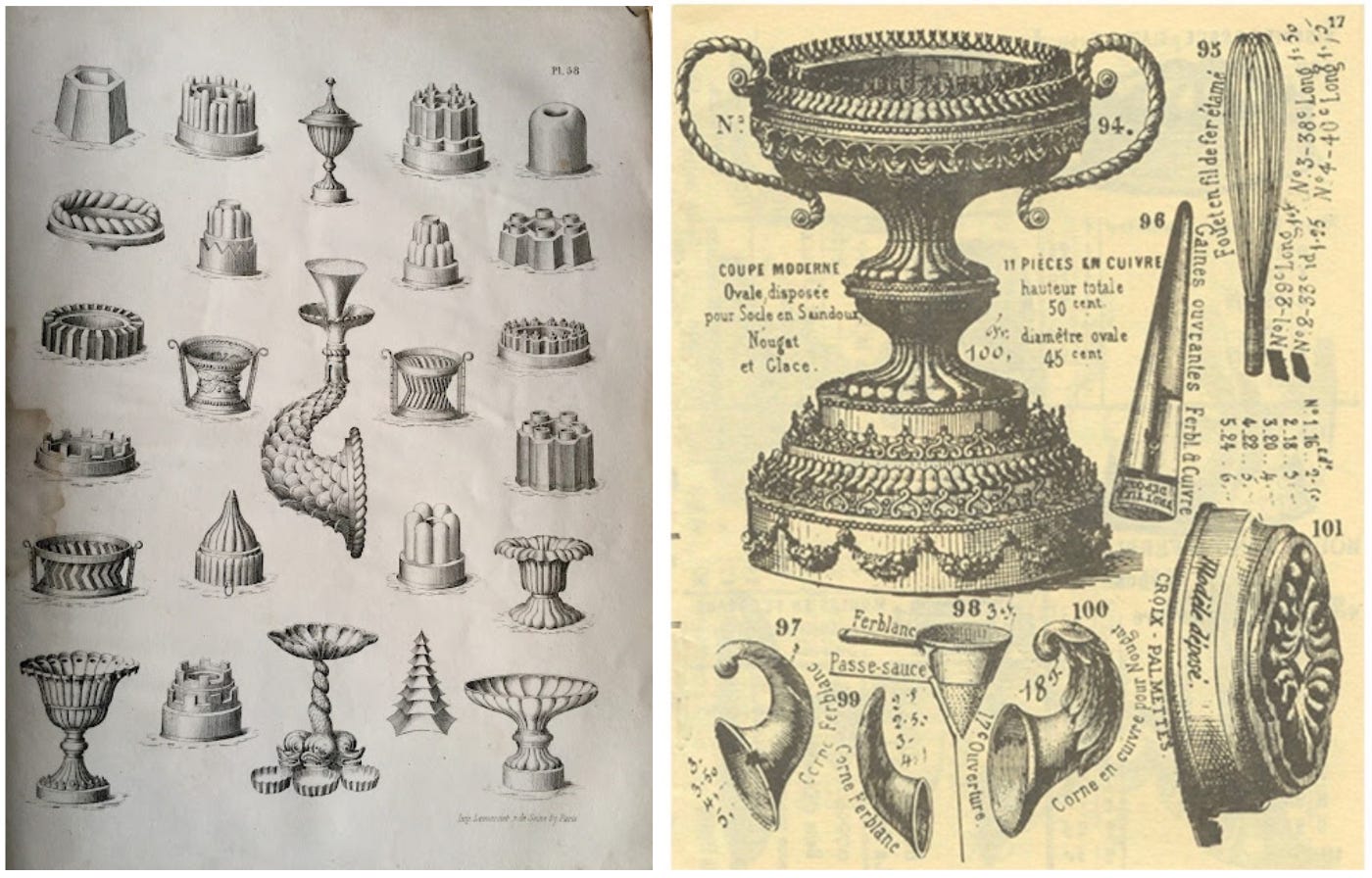
For almost half a millennia, gelatin dishes would continue to seen as a status signal, a way to flex a large house staff as well as opulence, but it wouldn’t be long until Americans, propelled both by the Guilded Age and their own Industrial Revolution, that gelatin as we know it would come to be.
Aesthetic Food For All
As the labor force grew, transporting and storing food for the masses became of outmost importance, “traveling soup” was the inspiration behind powdered gelatin, realizing one could dry the gelatinous stock into tablets that could be preserved and last longer, while easily rehydrating it. Gelatin began to be dried out in sheets, Coignet & Cie. in France was one of the earliest to produce these at an industrial level, these sheets were also as thick as a block, so even though it was great at preserving it for longer, its format still wasn’t as convenient as what we have now.
