


Redemption Arc-hes
Despite decades of negative portrayals and reputation smearing, the reality is, America runs on fast food. It’s been 20 years since the debut of “Supersize Me”—part of a cultural convergence that involved “100 calorie snacks” diet Coke supremacy and Weight Watchers, but despite all the revelations and light shined on the evils of chains like McDonalds, the world isn’t ready to break up with fast food chains. What was once considered lost to foodie culture and Instagram aesthetics, fast casual chains like Applebee’s, Olive Garden and Cheesecake Factory have risen from the ashes, stronger than ever. Call it much needed counter culture or deep ingrained nostalgia being leveraged by late stage capitalism, chains are back, baby, back, baby back…..
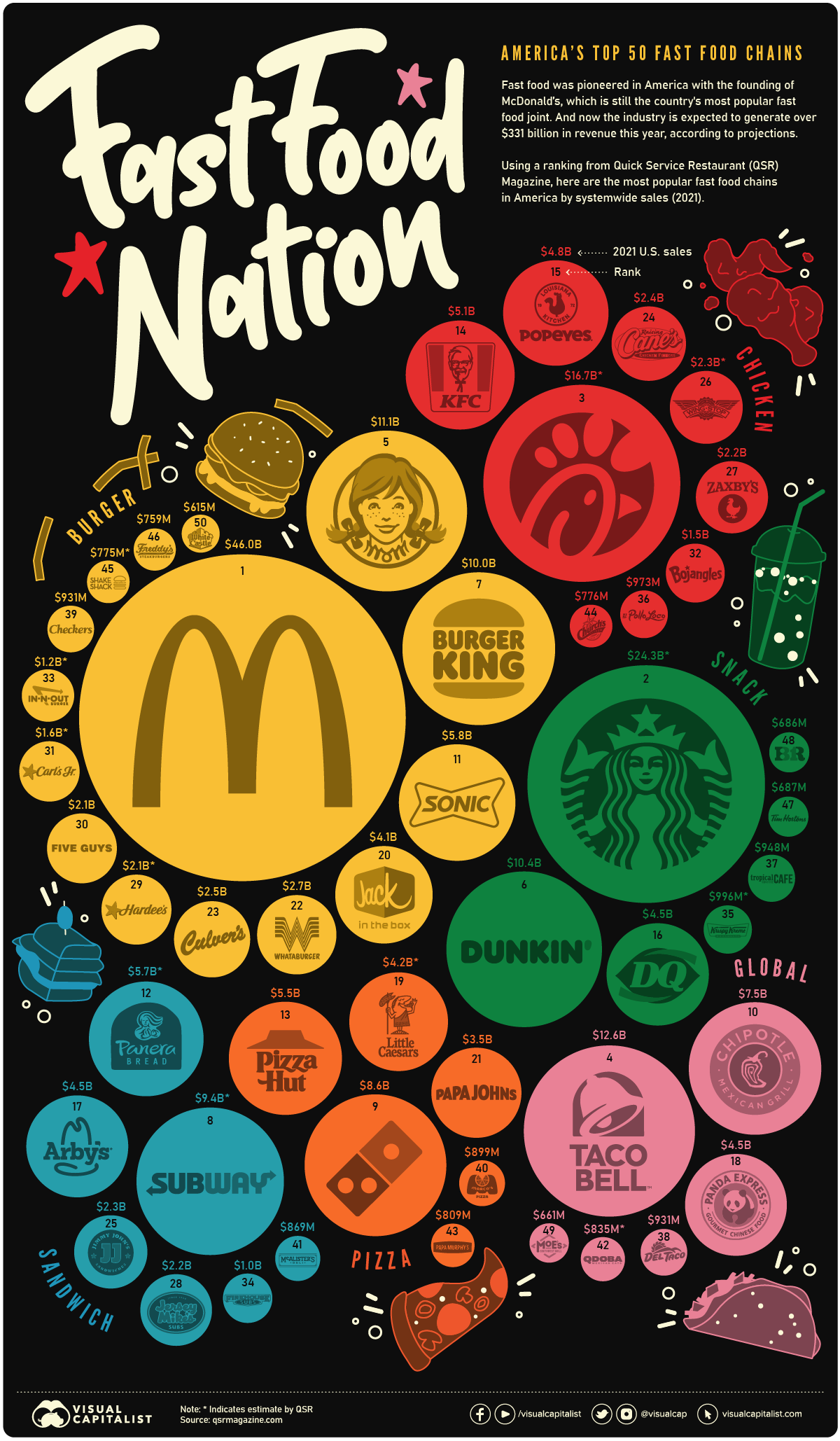
Chains are the backbone of America, fast food is the second-largest private employment sector in the US, second only to hospitals—no kidding? Over 1/3 of Americans eat fast food on a daily basis, having their picks betwen the 40 fast food brands that exist across the US. Please note, I’m not writing this as an advocacy for it, however, it’s important to note just how strong of a proposition is to be convenient and cheap, with many opting for fast food as opposed to buying groceries, as inflation makes this a no-brainer decision for many, for the same reason family bundles have become popular amongst chains.
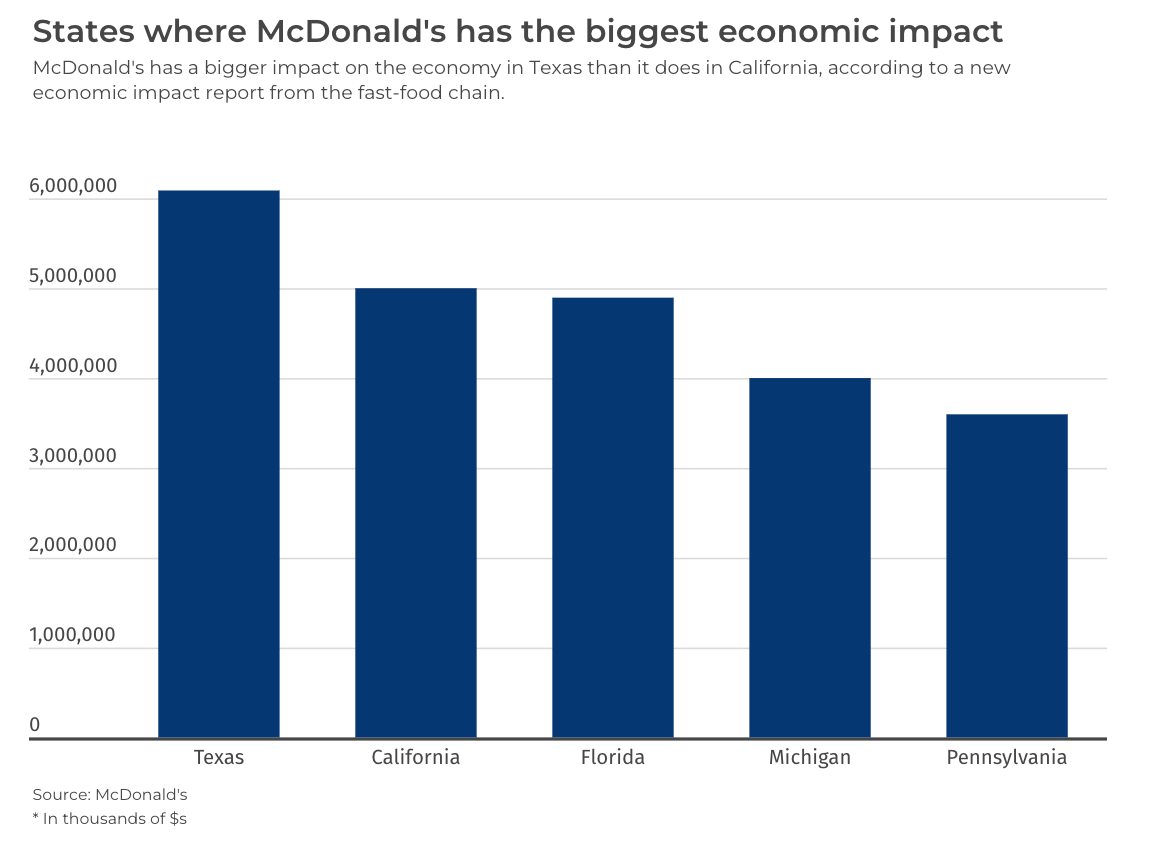
It’s not just the US, fast food chains became a way of spreading Americana culture across the globe, thanks to globalization, there’s a reason Europeans love a BigMac, mostly selling the illusion of past glory days, the majority of KFC’s growth now comes from China and Colonel Sanders has a weird lore in Japan, while Australians are eagerly awaiting the opening of Popeye’s opening down under. McDonald’s makes $120 billion in sales around the world, more than Starbucks and Subway combined, it’s literally a major contributor to the US economy, contributing $76 billion a year to their GDP, it’s so ubiquitous to the American experience, 1/8 Americans will have worked there at some point in their lives. In the same manner that corporations have become institutions, it’s evident that fast food chains have become equally as ingrained in American lives, just like the founding fathers intended, one nation, under capitalism, divisible by fast food preferences.
Crossing the Culture Chasm
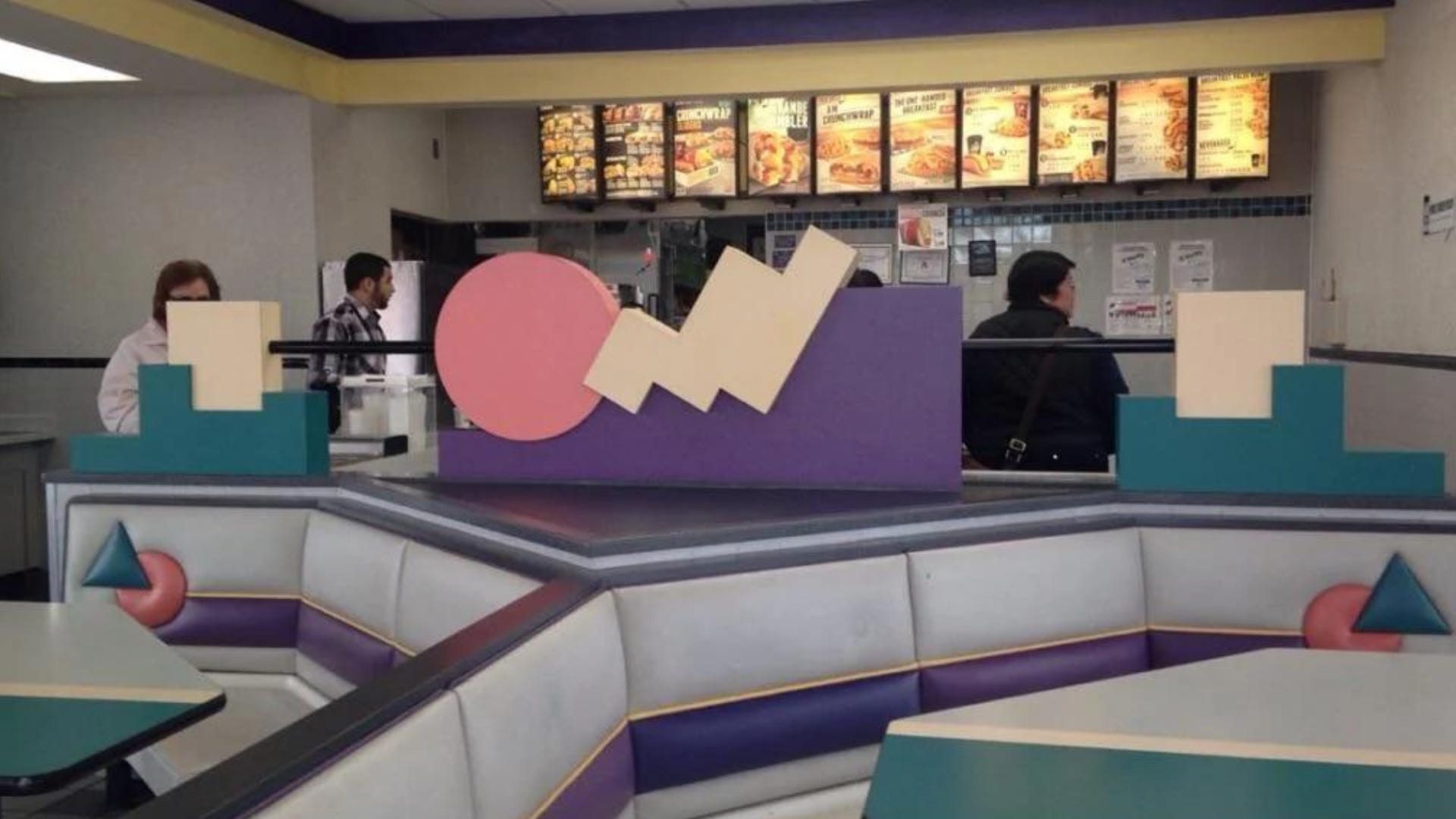
Fast food and casual chains have a long history of influencing culture—this 80s piece from The Atlantic touches on how their architecture helped shape and give character to US cities, there’s no denying it also helped other cuisines adopt to industrialized and uniform experience of cheap and convenient. From media, to fashion, to even religion? —there’s no denying we live in a world where brands serve as shared belief, for Millennials in particular, fast food and casual chains served as communal experiences, there’s a reason we collectively yearn for the yellow Subway vibes and pastel Memphis-inspired Taco Bells. For Millennials, coming of age meant hanging with your friends at Chili’s or going on dates at the Cheesecake Factory, these establishments that saw us transition from kid’s meals to 3-meal-courses, providing comfort within their poorly lit, Frasurbane aesthetic.
As the rise of blogging, Youtube, Twitter and Instagram gave rise to the phenomenom of the foodie, filled with more annoyance than a self-proclaimed sommelier, degrading food into content served for external signaling, Millennials turned their backs on these institutions over the 2010s, a decade that saw the rise of the “vibes” chains like ChaCha Matcha and Alfred’s coffee, or “clout chasing” chains like Carbone. Meanwhile, chains like TGIF, Chili’s and Olive Garden were reduced to mockery and memes by famous accounts like “Middle Class Fancy”—McDonald’s felt like it had to embraced it’s evil corporation status, forever to be hated on, and viewed as a pariah ad nauseam post “Supersize Me” —it had fallen out of grace.
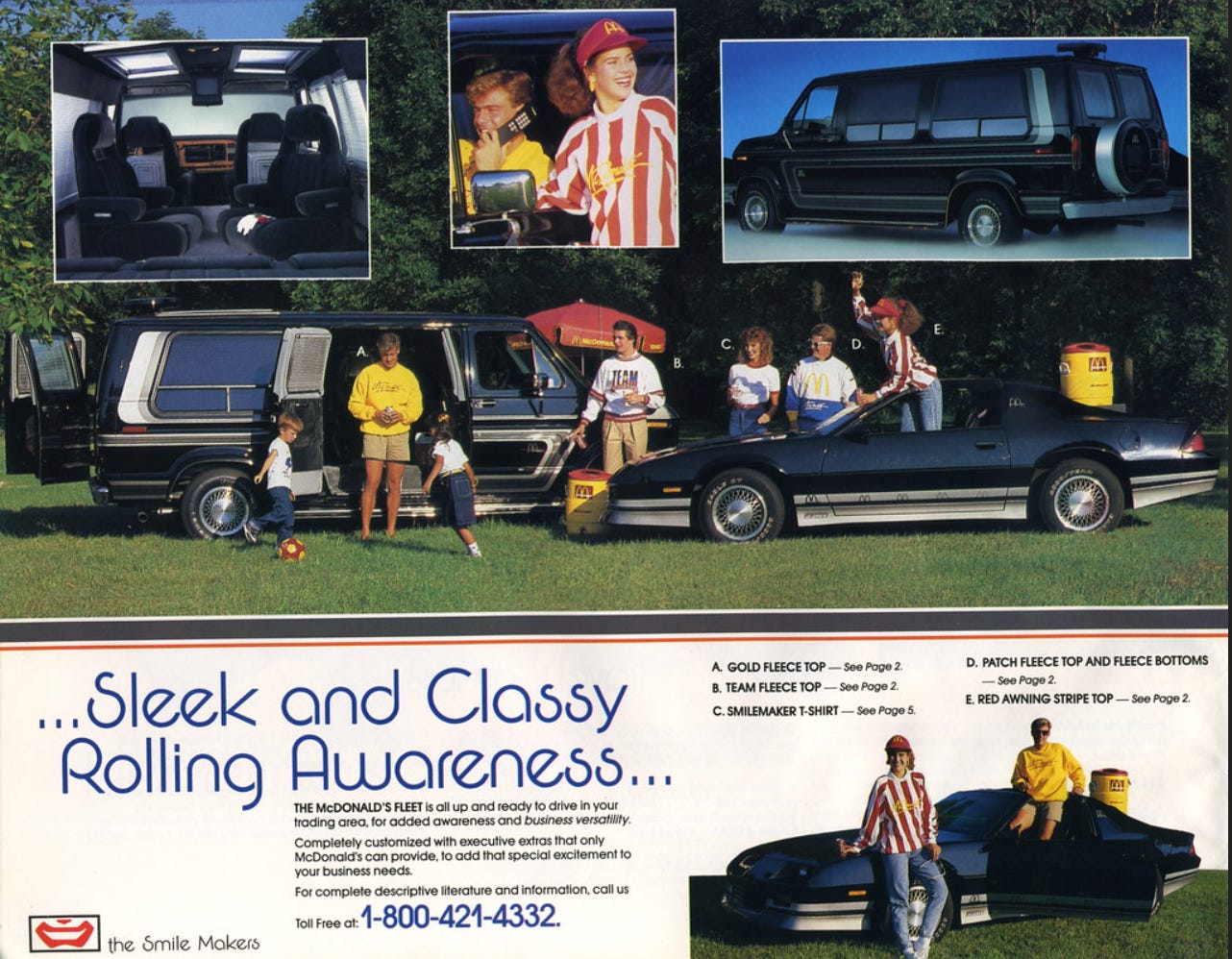
Back in the 80s, McDonald’s rizz was so strong, their employee catalogue included company branded sprinters, patio sets, children’s clothing lines, club sets, pens, walkmans, watches, briefcases —it basically covered everything from fashion to home decor, and though 2000s saw it embrace self-loathing expressed in the form of cringe campaigns and merch, it was thanks to the likes of Moschino in the mid-2010s that post-fall of grace, McDonald’s regained their icon status. By 2019, McDonald’s was ready to be relevant amongst those in the know once more, and it had a not-so secret weapon, Wielden + Kennedy. Since then, McDonald’s collaborations and stunts have brought them praise and regards, ignoring the haters and instead tapping into their fandom, they have continued to cross the cultural chasm, in the way only long lasting legacy can.
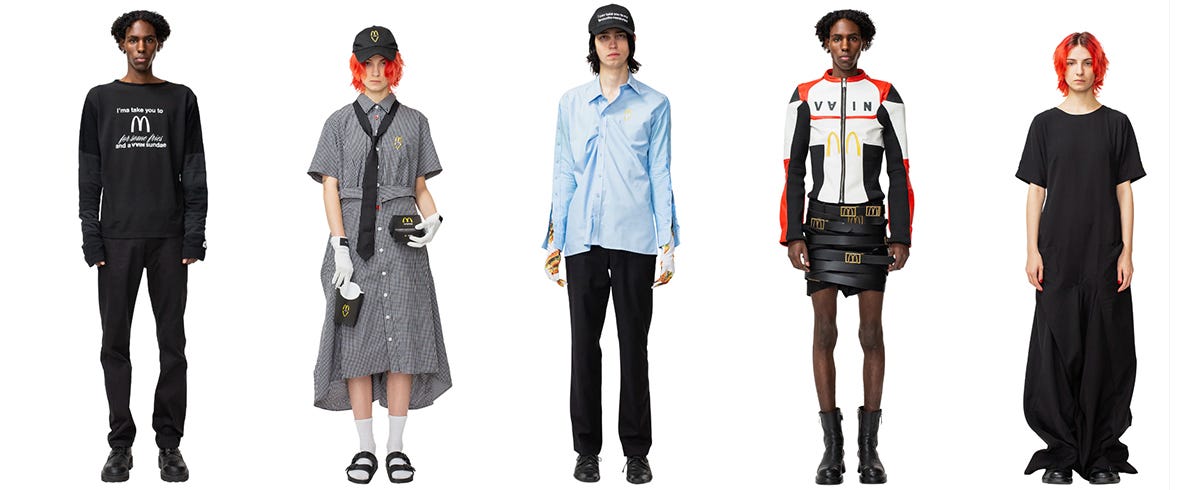
McDonald’s collaborations with niche brands like Cactus Flea Market, Palace and VAIN, have proven they can also partake in commerce as tastemaker, bringing back life to their existing IP like Grimace, who became an instant GenZ icon, fostering new generations to fall in love with their half-a-century old characters, in a modern way—kids may no longer have playtime at McDonald’s but they can get to experience them through TikTok or Roblox or limited collaboration drops all the same.
But it’s not only McDonald’s who has experienced a comeback of the ages—Olive Garden has posted record growth, Cheesecake Factory’s brand is so strong, even their retail line is booming, forcing the chain to build new factories to suffice demand. And though we should pour one out for the likes of Red Lobster (RIP), there is no denying America is going through a Chain renaissance, whether it’s due to Millennials approaching middle-age and searching for affordable family friendly meals, or its GenZ and Alpha’s version of a luddite movement clashing against “Algorithm friendly” places, casual chains like Chili’s are back on the menu.
If tapping into the gravitational pull of a well constructed brand universe proved itself to be so profitable for the above—could this be why we are starting to see the rise of the “Creative Director” role in fast food and casual chains?
For brands, creativity alongside utility = immortality.
These are things I’ve been thinking about, and why I wanted to learn more about this company that is serving at the intersection of the above, not an agency, a venue, but something that I feel has also inspired this new found obsession with fast food and casual chains as identity—tapping into hardcore fandom.
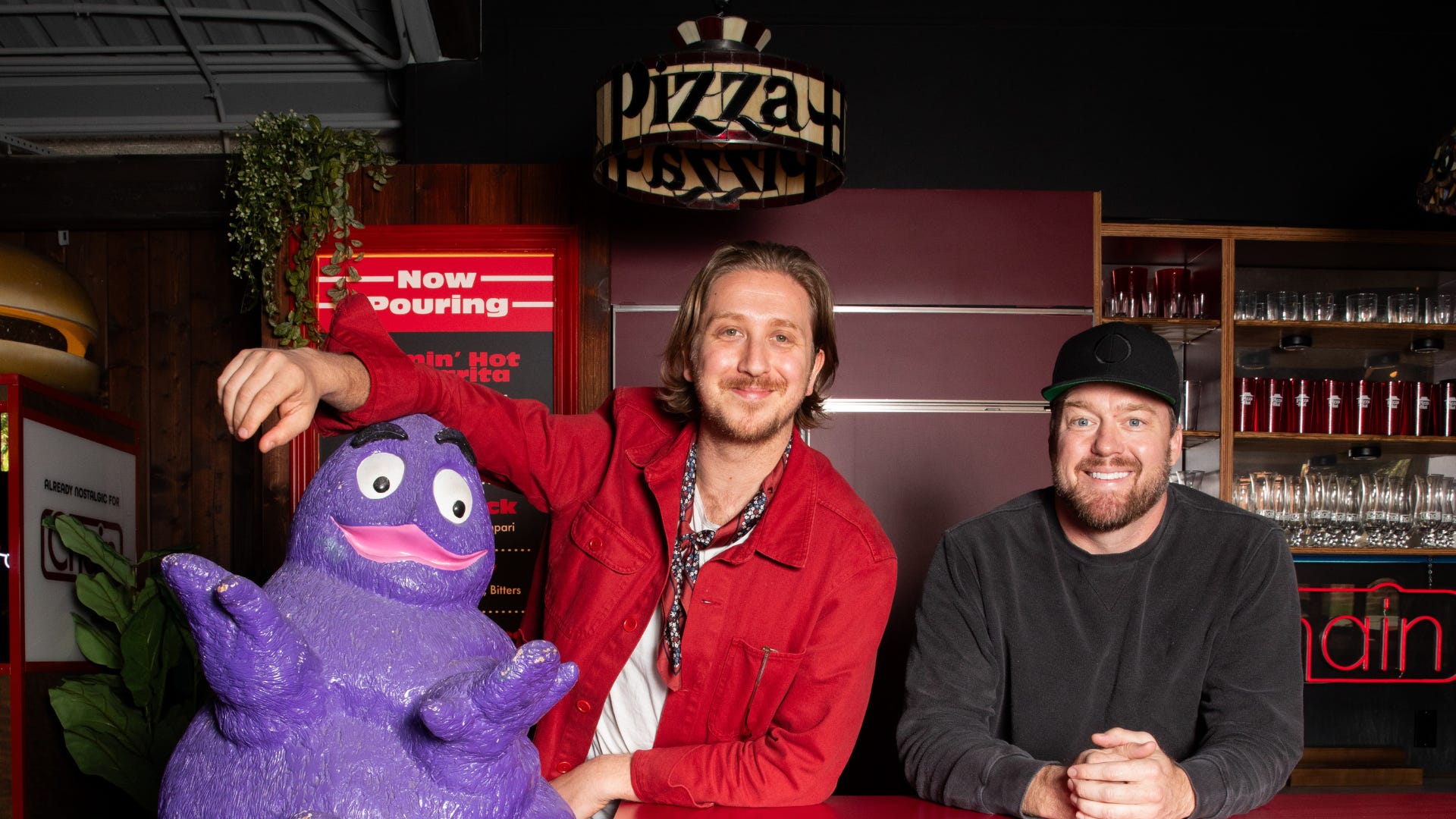
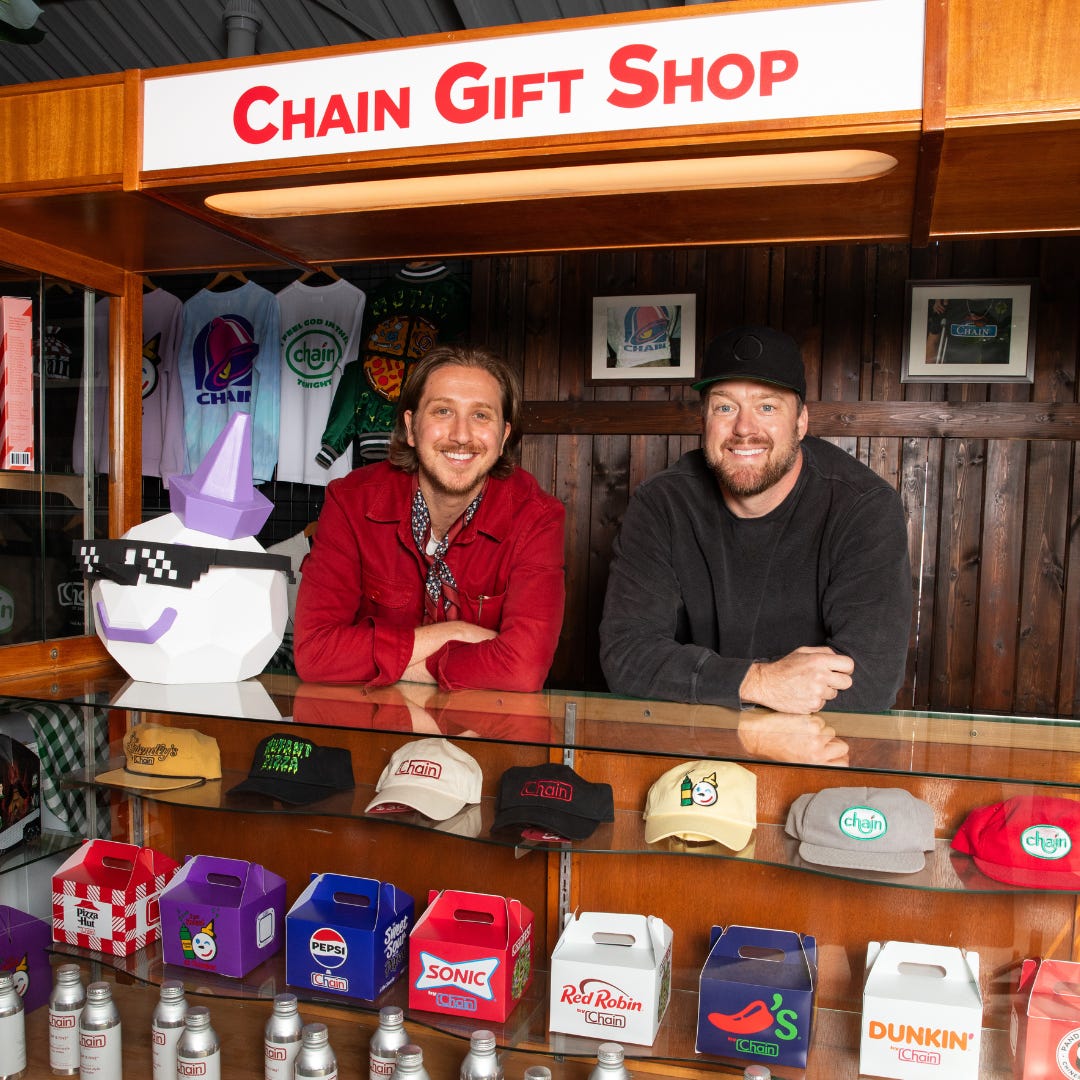
Chain, is a company co-founded by Nicholas Kraft, BJ Novak and chef Tim Hollingsworth—it’s a homage to chain culture while serving as a collaborative platform for existing chains, brands like Taco Bell, Pizza Hut and others work with them—doing what exactly? From instantly sold out limited merch drops, to pop-ups featuring an ode to classic menu items, to the first fast food festival, Chain operates at the intersection of creative and culinary.
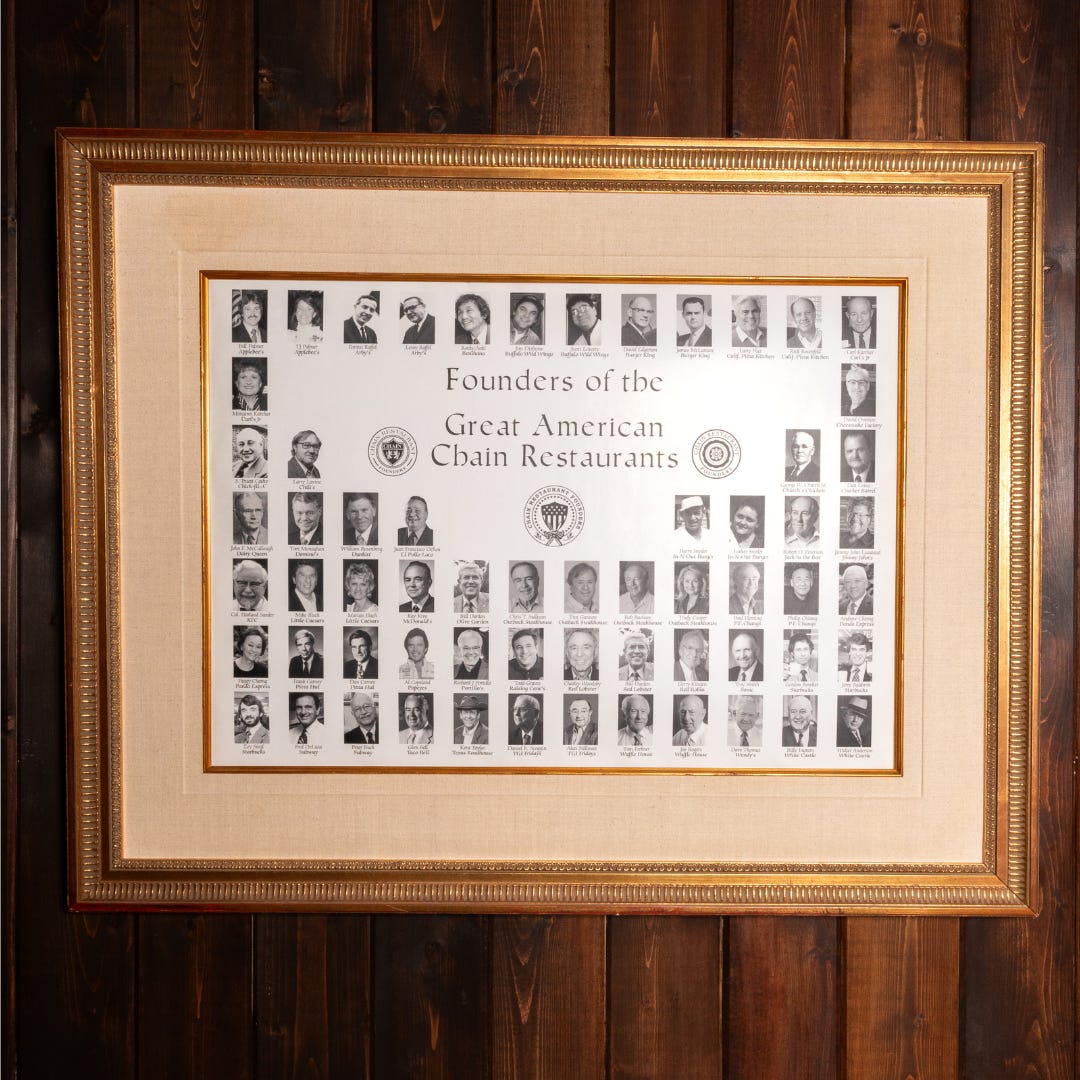
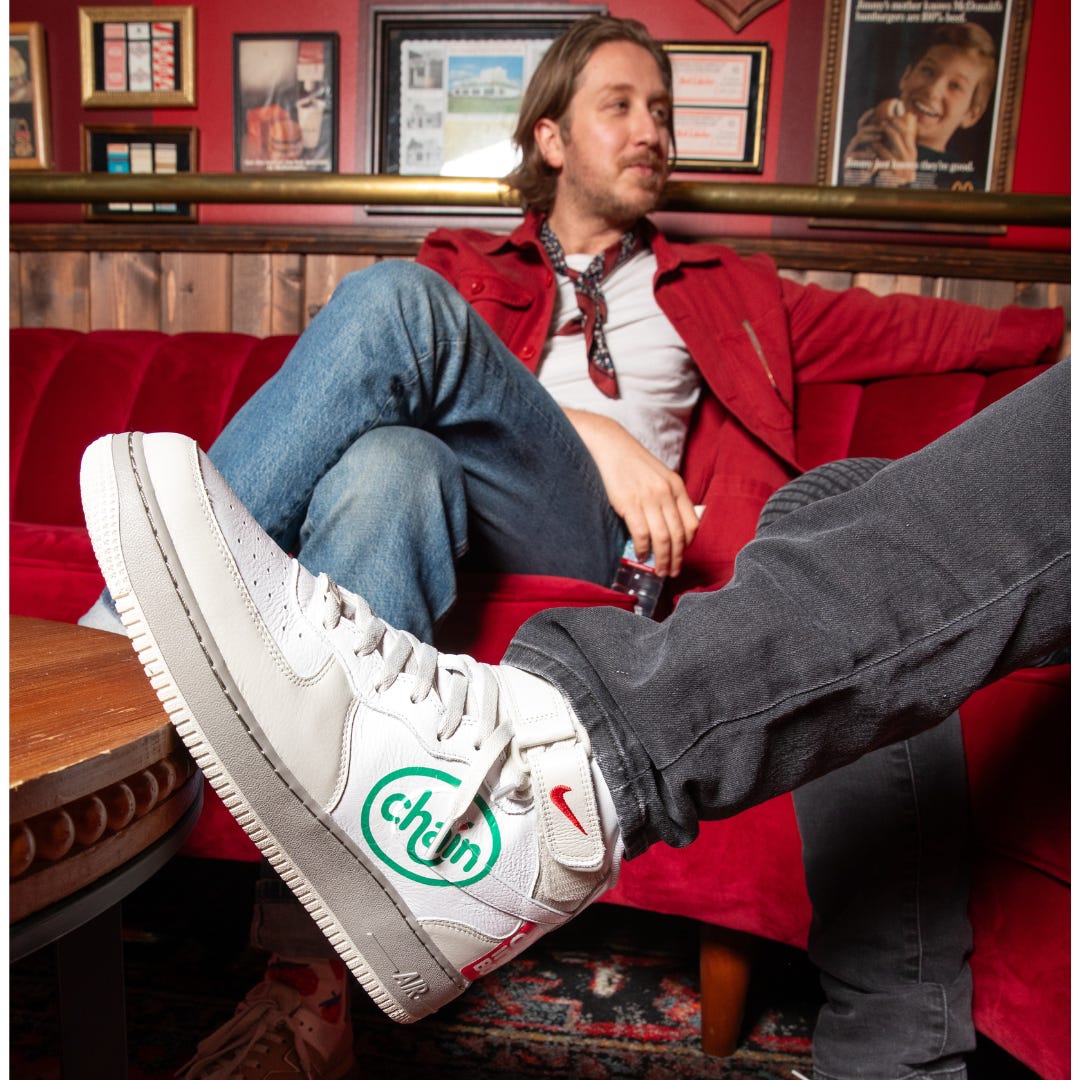
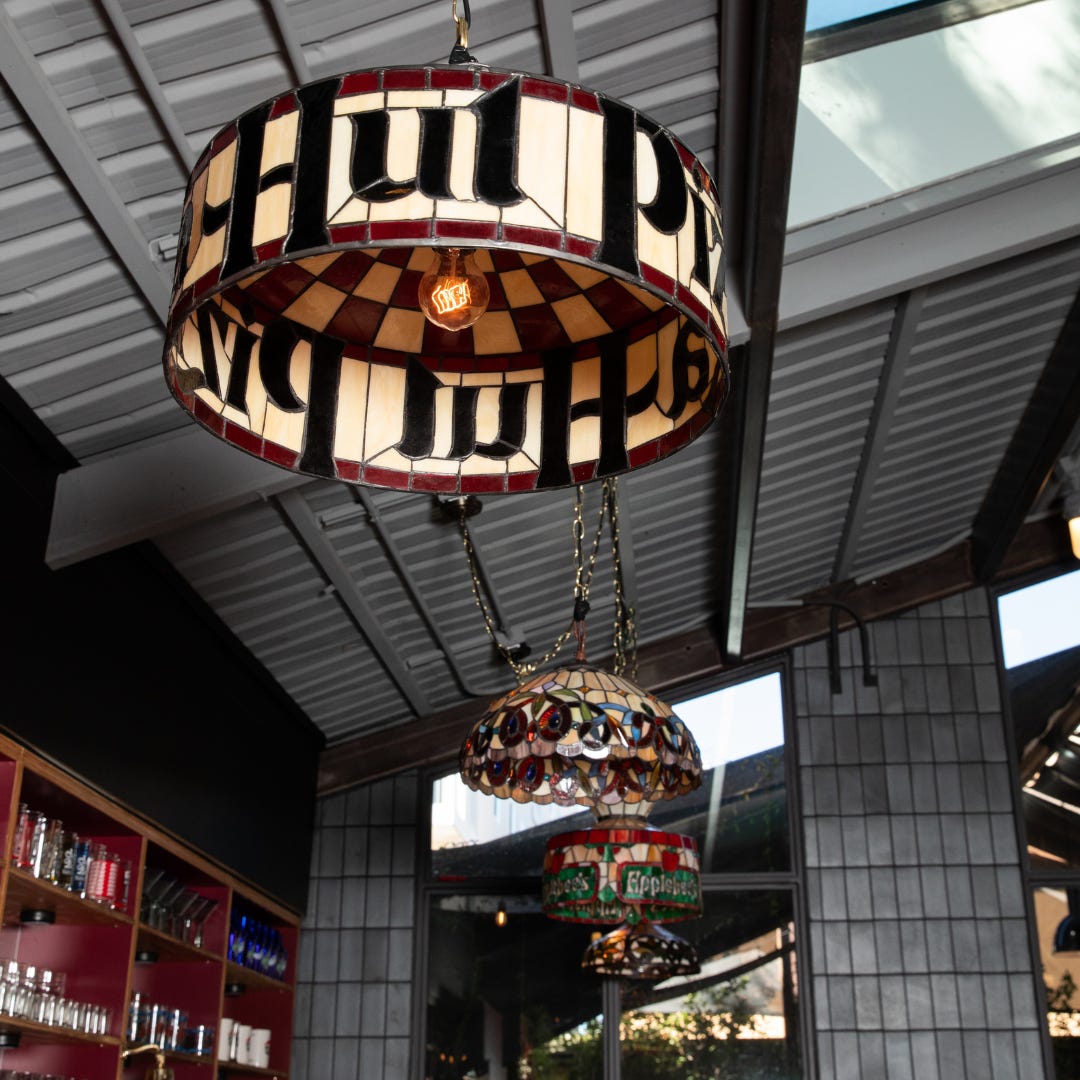
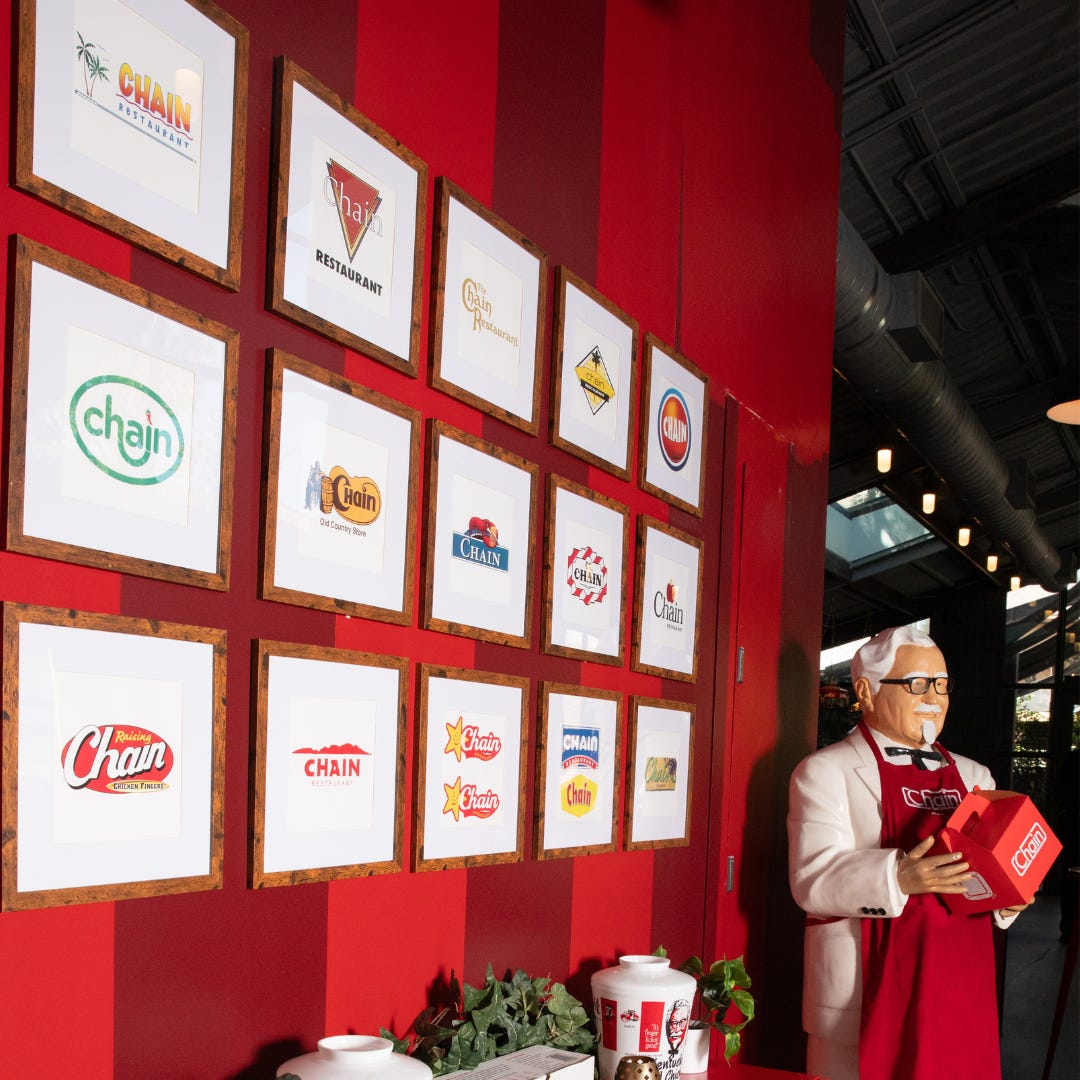
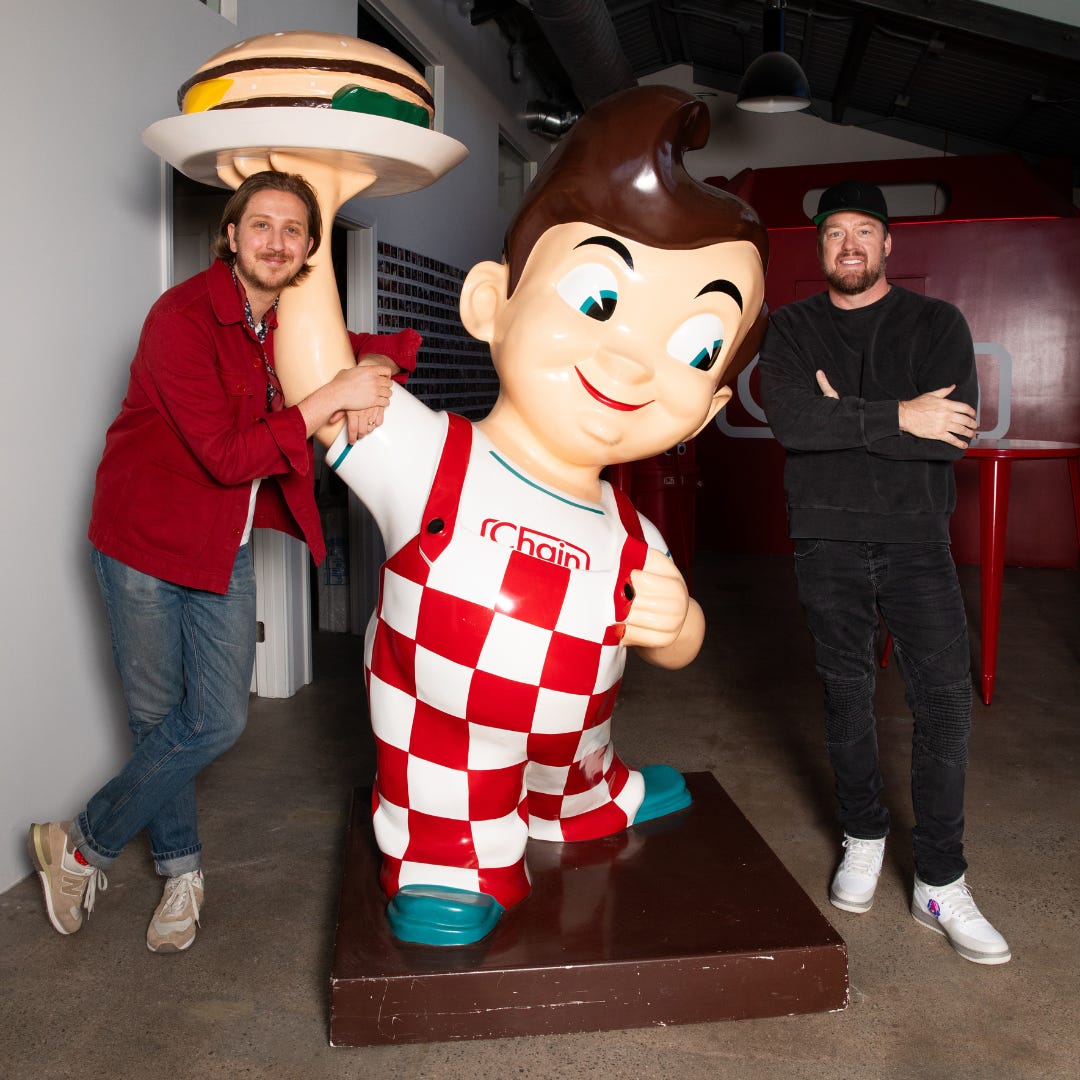
I had the chance to meet Nicholas and Tim at the Chain HQ in Los Angeles, a space that was designed to feel familiar, with tchotchkes of all sorts plastered around, featuring fast food icons of all sorts, in a meta way.
Our interview with the co-founders—
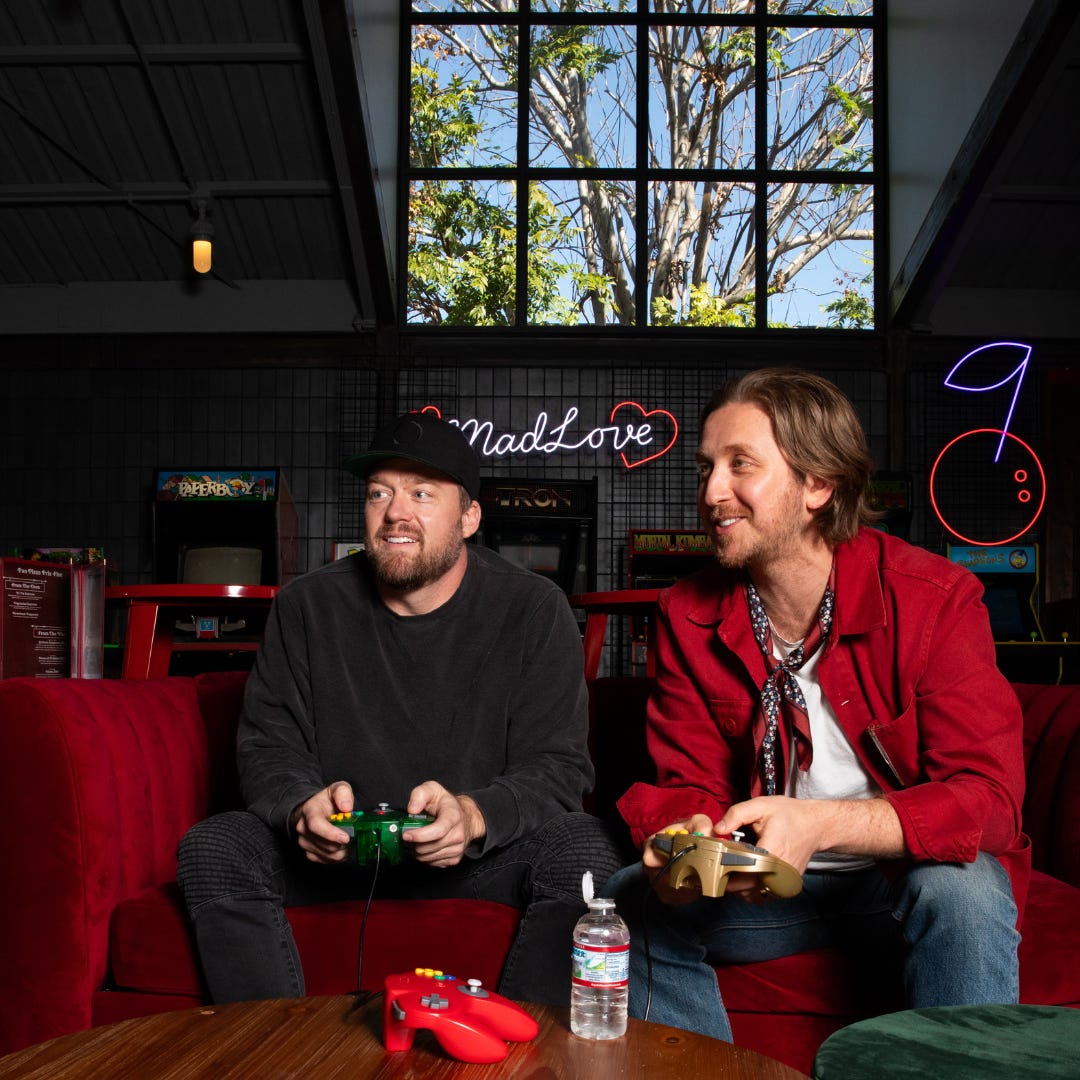
So just to get us started today, I'd love it if you could just both briefly introduce yourselves and talk a little bit about each of your background and how you came together to work on this.
Nicholas: I'm Nicholas Kraft and I'm one of the Co-Founders of Chain. Before Chain, I'd worked with our other co-founder, BJ Novak, for a long time in film and TV. When we were working together, BJ had an idea that he conceived of as a restaurant. He's like, you know, ‘whenever I meet someone at whatever great restaurant in West Hollywood or the West Village, it's like I secretly wish I was at a great Cheesecake Factory.’ And we thought, ‘Wouldn't it be funny to open a restaurant where we found one of the world's greatest chefs to create a Michelin take on everyone's favorite dishes.’ And we’d call it Chain, but there would be only one. That led me and BJ to meet Tim, who will tell you his story – but it was a mutual friend who kind of also thought this would be a great idea and found us a great partner to take this to the next level.
Tim: I'm Timothy Hollingsworth, and like Nick said, we met through Phil Rosenthal, a buddy of mine. He’d reached out to me and said, ‘hey, you know, BJ and Nicky want to talk to you – they have this idea.’ So we grabbed lunch at this restaurant downtown called Otium, and BJ and Nick sort of pitched me on this idea of the chain restaurant that paid homage to this Americana cuisine. For me, the nostalgic aspect of it was that I grew up going to chain restaurants was sort of a special occasion. My mom cooked a majority of my meals growing up. Going out to eat at a restaurant, even a chain restaurant, like McDonald's, was kind of a treat for us. Playing off of those memories that I had, I also used this as an opportunity to think through a restaurant that my family would feel comfortable eating at. See, I cooked for many years at this really high level. My parents didn't really kind of understand that food or that cuisine and took them actually like 10 years to eat at the restaurant I was working at, the French Laundry. And they live pretty close – like, you can easily drive there. When I go visit my family, there's probably like, 25 of us or whatever they get together and go out to eat at a restaurant. It's usually a place where you can just walk in with 20 or 25 people. So you know, Chain was exactly that type of restaurant, so there’s this added layer of nostalgia that hit home.
Talk to me a little bit about your experience working in that more upscale culinary world? What were some of your favorite dishes you made back then?
Tim: It's kind of funny to sort of put it together with Chain, right? Like the fact that what I was creating, even at the French Laundry, kind of the logic or the mentality behind some of the dishes there were, we're playing off of a memory. If you even look at the look of Thomas Keller's concept French Laundry, you’d likely see a salmon cone presented like an ice cream cone. And it's like, smoked salmon, cream cheese, and crackers – is what the dish would really represent, which is very classic flavors, and then presented in a really fun way – you could see that he was inspired by going to Baskin Robbins and having, you know, something really funny like that.
But you know, even classic dishes like peas and carrots, which are very classic frozen food items, or lobster mac and cheese, would be on the menu too. So he's kind of playing off of these fun American classic dishes cooked with French technique. That's really the foundation of my cooking upbringing, if you will. So throughout that process, we changed the menu every day and we created a bunch of new dishes – and a lot of the stuff that we would create would be based off of the idea would be based off of other dishes, or inspired by other dishes, and the goal would really that someone could come back into the kitchen and be like ‘whoa, this really reminds me of X.” But you’re recreating it. You're creating a brand new memory with somebody that has those fond, pre-existing memories. You're reinforcing, like, you know, all of these memories kind of put together. And that to me makes a wave. It's not really necessarily easy to hit, you know, because everybody has a different idea of what food is or different experience or food they grew up on – but the idea that you're playing off of these sort of nostalgic things… it's really fun.
“I think nostalgia is a double edged sword.”
But yeah, my favorite dish – I remember reading through one of my cookbooks, and it has a list of dishes or preparations and things — a culinary encyclopedia, essentially. One of the things in there was a Hangtown fry. I grew up in Placerville, California, which was known for people going there and discovering gold, and using some of that gold to buy the ingredients for something called a Hangtown fry. It’s essentially a scramble with baking fried oysters, and you can still find all the expensive products from back then. And so you know, I recreated that fish in different genres. At one point, I made this rolled omelet with a little bit of parmesan and black pepper inside of it and fried oysters. It was just this really beautiful dish based off of this not-so-humble dish back then, but now it’s kind of a humble dish today. It's kind of fun to play off of those things, and I think that's really what we do with Chain.
Nick, I feel like you have this inspiration as well, on the culture side of things, for what you wanted to create with Chain. Could you walk me through that a little bit?
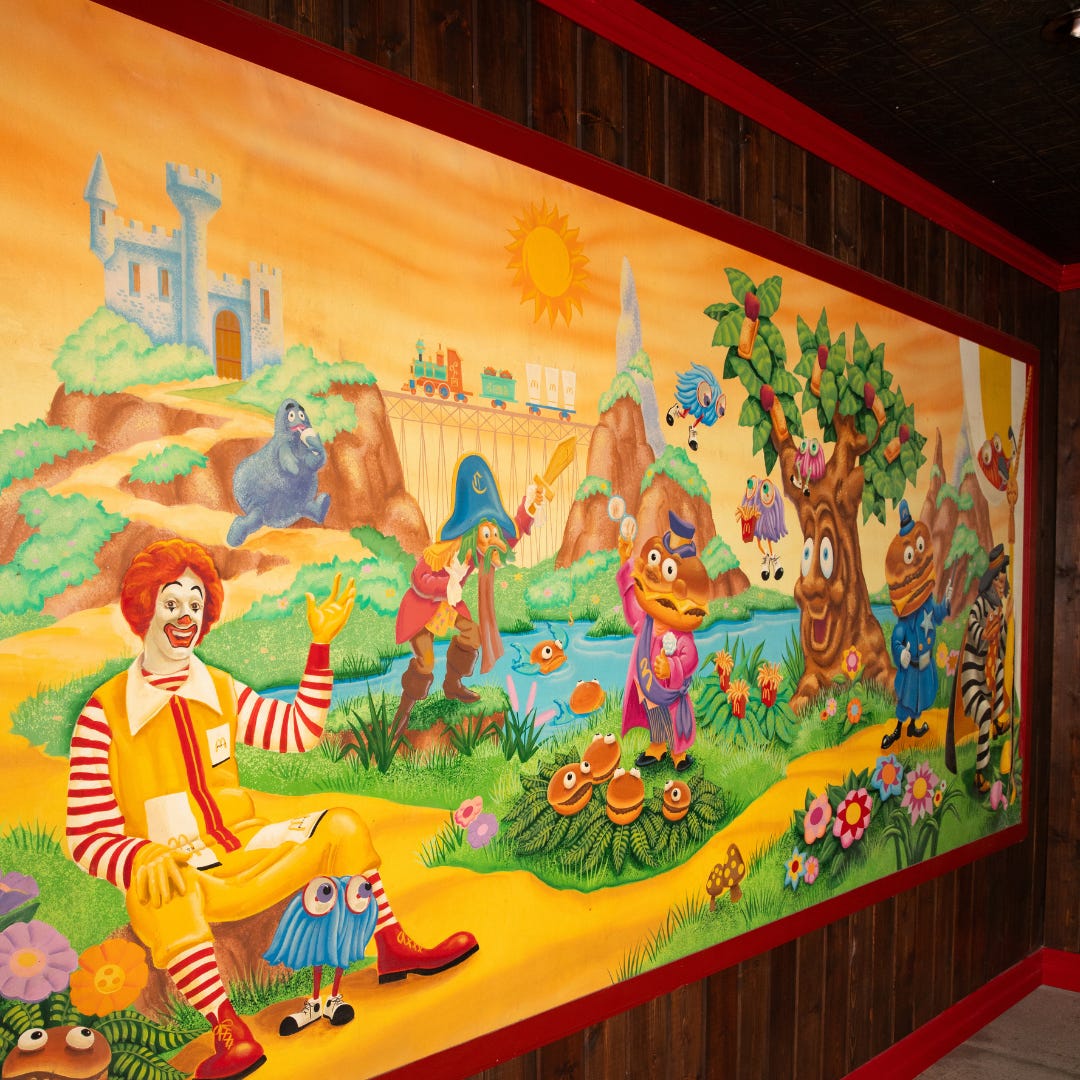
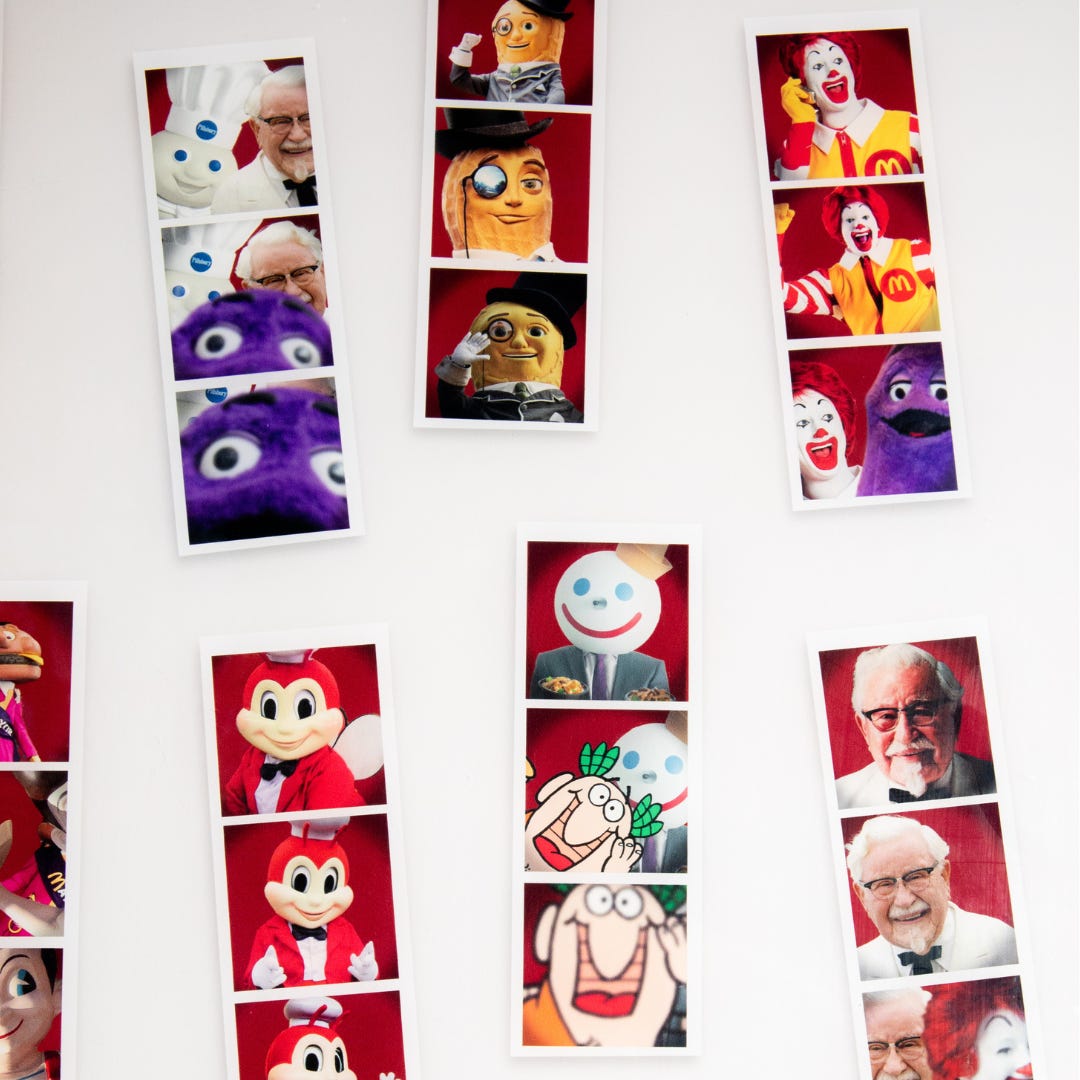
Nicholas: I mean, I have a weird connection, which is that all these collectibles are my dad's. My dad's a huge collector of pop culture stuff, and pieces of Disneyland. Like this Ronald McDonald was near the guest bathroom. My dad grew up very different from Tim – my dad's mom didn't cook a single meal ever. He literally grew up with frozen foods and eating out all the time. So for him, his memories of food were chain restaurants. So I grew up in a house that literally had this Colonel Sanders statue in the living space – this stuff to me was like just a very personal resonance in that way. And it's interesting – my dad had the world's largest collection of Disneyland rides, vehicle animatronics, and he finally decided to sell it and auctioned it all off. He just thought it was time for other people to have it.
So I was like, if we're gonna get rid of it all we should do a big exhibit where we show it all off and open it to the public. And like, don't put it behind glass – literally let people get into it. It was fun. And when we were doing that exhibit, we had like 50,000 people come in 18 days. It was crazy. But my biggest takeaway in it relates to Chain was, I would watch the most diverse set of people imaginable get emotional about the same thing. I'd watch kids get excited. I’d watch adults and grandparents. And I realized that DisneyLand is multigenerational, even the Disney that's constantly changing. There's things that are literally that are the day the park opened, or they're updated. But they've maintained this common identity. So what are they open to be 55. So this is 70 years basically, of people going, experiencing the same thing.
As a kid with your parents and grandparents, then you become a parent, and you take your kids. And I just realized that chain restaurants are the same thing. Most of these chains are just as old as Disney, and some are even older. They have their own iconography, some have their own characters. The grimness is that a mascot, the Burger King, and they're consistent, you could say that the food product has changed over the years. But like, I don't know how long the Big Mac has been around and how long you know, I think pan pizza was developed in the 80s. Like, you know, many, many generations of people are having an emotional connection. And so what was exciting to me about Chain was this multi generational nostalgia.
What were some of your favorite chains growing up?
Nicholas: So my mom was in Oregon, my dad was in LA. So when I’d visit my dad, we'd go to Jack in the Box, and we’d get tacos and curly fries. And then we'd go home, eat and like catch up. We hadn't seen each other in a few weeks. And we did this once a month for at least a decade. So for Jack in the Box, it wasn’t even like the food was a game changer. Sure, I love Jack the box. It's that memory – while I hope my dad lives a long long time, but at some point he won't be around, and Jack in the Box will.
Tim: I don't know that I necessarily have a favorite. I just like to put it together with specific moments and memories and times of my life – so in high school, in the morning with my buddies we’d be driving the 45 minutes to school, silver racing through the hills and then, we’d finally get into town and we would go to Burger King and get a sausage egg and cheese with the hash browns, coffee and orange juice. Or when I’d leave football practice and get two Big Macs, large fries and a soda. Or, you know, even after church growing up and going to Wendy's for the salad bar. Or, you know, it's like one of my first dates was at Chili's and another one was at Outback. There’s just so many of these moments that give me really fond memories, not even of the food.
Nicholas: One of my earliest memories is with Pizza Hut. My family was down the street from our house at this point, and there was this flash flood. And like so we were kind of stuck there. So I remember being stuck in pizza. And so I kind of really remember the pan pizza, the smell of the pan pizza, the red boots, the red cups. But that was like, kind of really fun to get stuck at a Pizza Hut because it’s really just pizza and games.
As someone who didn't grow up in the US, I still remember the Pizza Hut salad bar – it was like you said, that idea of selling American culture outside of the US. This is actually something I tweeted about and it went viral. I said, ‘Oh, I hope your day feels as warm as a Wendy’s sun room.’ And people started sharing all these experiences.
A lot of these brands have lost their charm, lost their uniqueness. In getting to work with a lot of these brands, I understand the push and pull of that on one hand, you want to be modern, because you want to appeal to new customers, and especially young customers, which would lead you to believe that you should not look back. But what are your thoughts on nostalgia?
Nicholas: So I actually don't like the word nostalgia. I think nostalgia is a double edged sword. It could also be like the 40-year old guys, being like ‘you know, I was high school captain of the football team.’ Like, okay, that was 20 something years ago, but multigenerational nostalgia to me is different. It’s just an acknowledgment of something existing throughout generations. I don't think you're asking for advice like chains. But to me, it's like, when a brand like KFC has a newer chicken QSR dozen it’s legacy. It's, again, tens, if not hundreds of millions of people who know the brand and have had a positive association with it. And like, you know, we were just laughing at that photo of Colonel Sanders. Yeah, like, that's insane. Like, you can't recreate that now.
What happens when this whole new generation, you and I are millennials. These new generations are growing up with their experience at Wendy's, through an app.
There's no playgrounds, a core memory for any 80s/90s child, not to mention, Wendy's is now using AI for the drive thru. What's Chain’s impact on culture?
Nicholas: So I'll tell you, I think that's one of the fun things about Chain because you bring up delivery and like you know, it's funny technology is all about making things efficient. Like what's more efficient than getting on a zoom, I don't have to drive across town and figure out parking and they go to an office, right? But what you lose when you strip out efficiency is some sort of magic, right? If I have to drive across town and find parking and go to that, like there's something about that experience, I'm not saying it's better or worse, but it is probably more of an expense. The fact that you guys are here in this office, we're gonna remember this moment.
I do think one of the things people really love about what we do at Chain is that we do huge communal events, and especially in a world that is becoming more disconnected, quite literally, no one goes into a Wendy's anymore. Instead, they order on Postmates on Wednesday. And yeah, you're exactly right. You lose the experience of going to the restaurant, of knowing there's a sunroof, that you smelled pizza dough in the air, you're not gonna smell that at home. There's a lot that was lost. And so I think what people especially learn about Chain is like, we're entirely about getting people together.
So would you say that Chain is now serving as an anchor for these chain restaurants as they modernize and lose that cultural relevance, to maintain it?
Nicholas: I think every partner we've worked with is looking at it through a different lens and I don't want to speak for them. But I think the reason they didn't send a cease and desist and instead said we want to work with you, is because they see a guy like Tim with his culinary reputation, saying, I love this food, I want to honor it. And they see a guy like BJ, our creative team, so I think for a lot of our partners, the service we're providing is different. That’s also why we get such strong turnouts, I think.
So then my next question is, what is the value proposition of Chain? What are you offering as a business? Would you consider yourself a business, or do you consider it more of a cultural statement?
Nick:. I mean, yes, Chain is very much a business. But to us, it's really about a few things, it's about events, and getting people out of the house and paying to go to an event when most people don't want to do that. We want to sit at home and scroll. And sure, obviously not everyone can come to an event. Not everyone lives in Los Angeles, for example. Our events can serve so many people. But like even the hot dog we did, we sold like 1000 in a day, which blew us away. It was like, alright, there's a lot of people out there beyond our immediate circle in LA, like, “Oh, this is meaningful to us.”
So you just take a percentage of that, how do you split it with like Pizza Hut?
It totally depends on the client. It totally depends.
Talk me through some of your favorite collaborations that you've done? And how do you pick the brands, do they come to you? How do you ideate these concepts?
Nick: I think one of the biggest ones for me was Taco Bell, and I think that the reason for that was it was kind of our first official collaboration. It really helped validate what we were doing because Taco Bell, a company that we really respect, was looking at us and saying ‘Oh, you guys are doing something really cool,’ and we were small at that point, so the fact that they wanted to be involved and while we're enjoying they want to underplay want to understand a little bit more they they appreciate what we're doing and then so to be able to recreate a Crunch Wrap – that’s so iconic.
It was really fun and honestly not that not that easy to do. I wanted people to have that full experience – to walk in, to eat the food, whatever it is – I want them to walk away and smell it in their hands, it really had to feel like Taco Bell. And it did. Sure, all of the ingredients and preparation are completely different and we’re using completely different techniques. But ultimately it has to hit home to that memory, you know, that feeling that you get when you have it, but it also has to be the best version you've ever had.
So you're like, it's reminiscent. It's supposed to emulate Taco Bell. But what was different about the Chain rendition of it, for example, like what was on the menu?
Tim: All of the ingredients and the process were different. But even some of the ingredients inside are not, I mean, we went to their headquarters, we saw how they made their items, which was really cool. Like, you know, even as a chef, like, I don't, I've never worked in a fast food restaurant ever. Yeah. So to be able to go and make, see how they're doing something, it's interesting. You see different techniques, and you’re like, so this is how they are so efficient at what they do. So we're, you know, we're going and seeing that kind of r&d in their kitchen, and then going back home to my kitchen and being like, ‘hey, how am I gonna make this better?’ For me, it's always playing off of my memories as well, my memories of my mom making tacos once a week. And those tacos were, like, white boy tacos.
She would make either a fried flour tortilla or fried corn tortilla shell, and add ground beef, beans, tomatoes, lettuce, sour cream, cheddar cheese, all that kind of stuff on it. So the Crunchwrap is traditionally just pressed and grilled. And so I wanted to pan fry it and get it crispy, but like, to perfection. And we added that extra fried flour tortilla to make it a little bit more decadent. And then we had a homemade taco sauce – everybody loves that Taco Bell hot sauce. But we made it better. So people got it – they were able to point back and be like ‘oh, it comes from this, but it has a much more full flavor with more body, and a little bit more technique involved in making it.’ So you know, it was fun to recreate it in a way that was really trying to make the best version of that dish.
Nicholas: To your earlier question again, every collaboration has been different. But like, I was also thinking about what's in it for the brands? Again, there's a lot of moving pieces, but most of these brands are like oil tankers. I mean, truly. There’s thousands and thousands of franchised locations, and it can be hard to do anything quickly. But culture moves fast. And it's moving faster and faster. Something that's interesting today is probably going to be boring next week. And I think one of the reasons that brands like working with us is that we like paying respect.
It’s not like we don’t love MSCHF, but MSCHF is very much antagonistic. We're the opposite. We're celebratory, but we can do things really quickly. And we almost create a permission structure for these brands – do you think Taco Bell would have otherwise ever done a Wagyu beef crunchwrap Supreme? I don't know, I clearly think they should. But to do that at scale, will take them years and years and years. As an example, one of our partners told us that they were going add something on the menu for one day in one location. But it was going to take them eight months to add it to the point of sale system, because their technology was so old.
So I think what's fun for brands is they do something that Chili's might never do, not because they don't want to – they just couldn't. There's obviously a ton of media and fan engagement around the love of Chili's. There's also you know, and I say this as fans of the brands, but anytime a company does something, it's inherently corporate, just by definition. And so I think of Chain being like hardcore fandom. In working with Chain there's a little bit of an unlock. It's almost like the fan love letter and I think people end up wanting to come to events who would never necessarily go to a Chili's sponsored event. Chain has just built this reputation of doing great events with great food that still plays in that world of nostalgia.
That’s incredible that you've been able to leverage that fandom and create something like Chain. Even just looking at how to talk about chains announcing new products this year, Taco Bell did this whole keynote event.
I feel like it was one of the things too, where a lot of these people have missed the mark, and why they are not able to do things that are cool, and can even sometimes come off as cringe.
They've just never put the consumer at the forefront instead bringing its industry like national retail convention, whatever. But there isn’t that ability for the consumer to actually engage and get that real feedback.
But I do think that it's interesting how you've been able to leverage that fandom and create something that's like this Comic Con, but for fast food. I think that's insanely genius, because like you said, there is that hardcore group of fans. So, on that note, what are you thinking for V2? What's the vision for it?
Nicholas: Well, Chain Fest will be happening again this year, and it will be bigger and better. That’s all we can say right now. But more broadly speaking, just look at a lot of these brands’ comments sections it's just people complaining a lot. But when they work with Chain, it’s like 99.9% positive feedback. Look at those social comments and look at people's interactions. I think for some of these brands who are “so what's what's like” they've been burned rolling something out, and people just being assholes online.
Again, like, I don't know what it's like to have a place that has 8000 locations, and you have to roll something out. Like that's a crazy feat to get it right.
I will say, what I love about it, it's that you even brought the mascots to life that was hilarious.
Nicholas: Again, I won't name a brand that was really reluctant to have their mascot. I was like, can you just tell me what you're reluctant about? And they're like, if I'm being totally honest, a mascot can go from a zero to something inappropriate in one minute. Oh, someone gets a video of it. It blows up on Tiktok —I'm like, I assure you, that won't happen.
Kiernan Shipka announcing the march of the mascots and they're all doing big conga line, you know, it's like this crazy photo of John Mayer and Andy (Cohen) gonna hug in the Red Robin. Like, it's fun. It's held on you know, I'm glad all the brands that have mascots participated. I tried to convince the brands that do not have mascots to create a mascot. I was like, I don't want you not included. And they're like, well, our brand standards to create something in time.
I mean, look at what Pop Tart did for the Super Bowl, they created a mascot. So you guys are definitely suggesting things that make sense. And I know like we're like, coming into like an hour of this. And I just really did have a pressing question after seeing the Pizza Hut condiment collaboration.
Sweetgreen is now moving their sauces into grocery stores, not just selling it in their chains, Taco Bell and chains like PF Changs, particularly Chick fil A have been super successful with CPG, like that sauce that they have that's like blown up everywhere.
Could you envision something like this last cooperation, being a platform to help these brands kind of pilot new products that could extend even into grocery because obviously restaurant to retail is such a booming market.
Nicholas: So for every Chick-Fil-A sauce, there's a dozen that went to market and failed. And we think, no pun intended, we need to have the secret sauce. And we are talking to some brands about this because it's not. It's not a one to one, you can't just take the sauce here. People love talking about mild sauces, Tim just said, is it flying off the shelves at Target? And you're talking to some partners about why that is? And so I think you're right, because you know, sauce is a great thing, like, it's really hard to scale gourmet food.
So, you're saying that you are exploring, like doing these CPG collabs more often?
Nicholas: certainly more often than we have. But again, it's like, we're in a good position. We don't really want to do anything that isn't we don't think is gonna have real legs. And like, you know, some brands are really down to go for it. Others are really, really cautious, understandably. And, yeah, we're just like, you know, you, we don't think this is going to work the way we do it. Because you have to understand not just like the culinary side, the cultural side of exactly what's gonna take off.
So for our last question – Cheesecake Factory posted that job – Creative Director of Brand. That did not exist as a position before at Cheesecake Factory, for however long it’s existed as a chain. They've done drops before, obviously, before the ones that like, you know, you've collaborated on. And somehow, Chain started, got really successful, and in the year 2024, they put out that job that got recently filled by someone who used to work at Warner Brothers.
So here's my thesis, you don't have to agree with it – but something that I've been noticing, even with McDonald's having this sort of blow up moment by being able to tap into culture. They partnered with this very obscure indie Helsinki brand to do these futuristic looking uniforms that shocked people. And we're all suddenly like, ‘Wait, this isn't tacky, this isn't cringe,’ and you have this whole resurgence of cult chains coming back and becoming culturally relevant even amongst elite coasts.
So would you say that there is a need for a creative director in these style industries, because the more commerce intersects with culture, whether you know, even grocery for the idea of a grocery store, like Erewhon, being able to sell bags for $300, like grocery stores are doing it.
Now, it's fast food chains kind of looking at that and realizing, ‘we can also extend that and build this and sort of a little cult, right?’ So what are your thoughts around this new role of creative director of fast food? And I would love to hear from both sides, obviously.
Nicholas: Well, I'm also curious to ask you, Tim, to piggyback on her question, because my background is not food. You know the food space so much better – does that exist in fine dining?
Tim: I mean, I think it's existed, but it hasn't been as much of a thing. When you talk about merch, some places have been better than others. But I would say, even a few years back, a lot of restaurant merch became super popular for people to wear every day. I mean, I have, you know, suspects specifically the Front Runner, I probably no joke have like 100 shirts that were given to me, you know, that the company produces for different reasons. And so it goes, it goes way back, but I think I think now it's really interesting to see these brands taking it to the next level where it's not necessarily just a generic T-shirt. It's something that's cool, that you would want to wear , and the idea that they're making a cultural movement, I think, is absolutely huge for the whole food industry.
Nicholas: That's what I love about Chain as well, because that's what we're doing. That, you know, we are doing it and honestly, whether who did it first I'm not really sure, but I feel like we started see this taking off, and then all of a sudden, you see all of these big brands, you know, the importance of getting back cultural moments. And it's, it's a cool thing, you know, like those McDonald's uniforms, they’re awesome. Yeah, but then on that flipside, it can be really cringe. And look, your question is, do I think they need or would benefit from Creative Directors? Yeah, absolutely. These are pillars of culture. These brands have hundreds, if not 1000s of locations, that serve millions of people – they’re in the culture business as much as in the food business. Orrrr just work with Chain. I mean, really! I think that's one of the reasons we've been successful. And while we continue to work with the same clients, it's not like a one and done deal. We're willing to push them outside of their comfort zone while still being like, we love Chili's, and we're just coming at it from Tim's fine dining POV.
In ten years do you guys see this extending? Or do you think it's just this moment in time?
Nicholas: I really think I'd love for Chain to be not just a brand that's creating products and creating their own things, but really a great platform for change is a phenomenal platform. It's like we sold 4000 tickets in an hour and change fast to when we and then we're like, okay, we added a third day. This is last year, we added a third day it was like I guess dance crazy. We didn't even get our act together on time to announce the third date that was added before it sold out. So we have established reputation and tapped into a cultural vein that I think a lot of these brands didn't realize existed. And I would love to be the place that is like every year chain fest it's like Comic-Con. And like again not doing it as a “yassification,” but in a way that we’re celebrating that this stuff is really cool and people love it. As a product example, just think of ranch on pizza. Why hasn't someone developed Pizza Ranch? Just thinking like that. But no, this is not like we're done.
Where are you going to keep sourcing inspo from? Is it just going retro and bringing them back in a cool way? Or do you think that there's room to get crazier?
Nicholas: I think there's room to reimagine what a chain restaurant would look like if you opened up today. What items would be sold, what sauces there would be, and how we could pay homage to these brands and work with them while also creating items that are specifically Chain? That maybe have nothing to do with existing products, but still fit in? Yeah. That’s where I see this all going.
This interview took place in March—since then Chain’s recent antics of note include their collaboration with Pizza Hut to bring to life Jimmy Fallon’s own “personal pan pizza” and most recently a Jazz-style club called “Pollo Lounge”—what can only be interpreted as a play of the infamous Polo Lounge, minus the chicken bucket—both sold out events.
For more coming activations at Chain be sure to follow their Instagram.