


A newsletter on upcoming food and beverage trends that offers a curation of brands and aesthetics written by Andrea Hernández.
Snaxshot is ad-free as we are community funded, if you enjoy our content, contribute here. 🤗
🔮 Peek into the future:
ExpoWest is not so much a reflection of the future of products, but where trends eventually hit mainstream
Expensive conferences and booths as a way of gatekeeping diverse founders, widening diversity gap
Curated grocers and retail incubation as a better alternative to Expo
Power dynamics are shifting as GenZ enters center stage, and wields internet utility like no other
The anti-bland movement is finally here, long live gross aesthetics
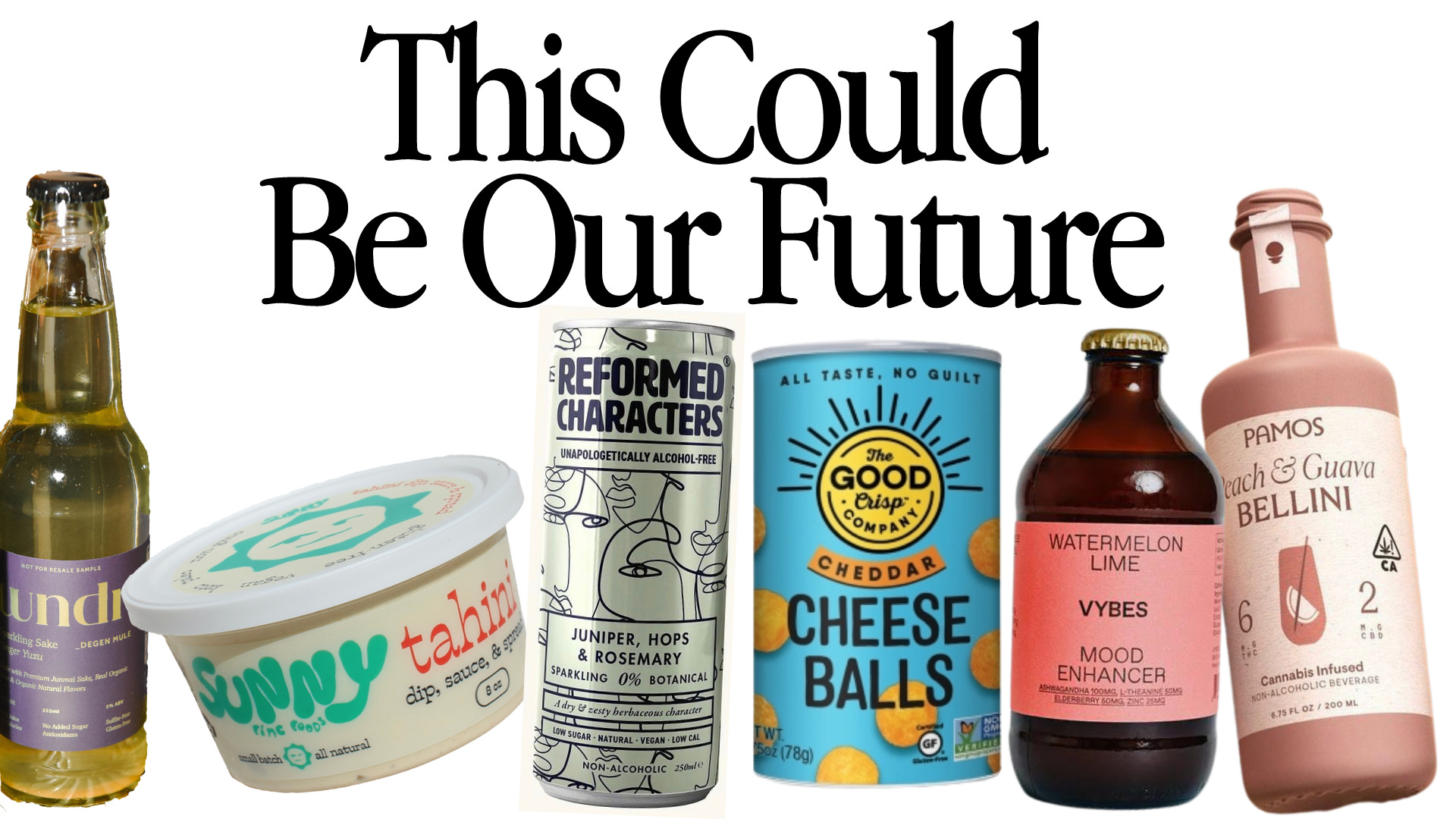
This could be our future, on building less zero sum dynamics and the power of true community
Don’t be shy, the water’s warm, don’t forget to hit the subscribe button below.
Emperor’s New Snax
Found at the corner of “found in plain sight” and “obvious” are all the same regurgitations and half baked assessments of “trends” found at ExpoWest this year. That gut health is trending —yeah, it’s been obvious that Millennials are aging and are trying to conceive something cooler than Metamucil, or the wild successes of the likes of Olipop (an OG snaxboi staple) or Poppi might have hinted at that, not to mention brands rebranding to fit the gut aid narrative, or the fact that we can now see this explosion permeate markets in Latin America, Europe and elsewhere — when did we become content with being repackaged with what’s inherently obvious? ExpoWest has become less about what’s future of food, and more as to what’s already hit mainstream.
If this triggers you, it should also be noted that in a way it makes sense, the cost of booths at this conference average between $15,000 on the lower end, and $90,000 on the higher end —not many newly launched brands or about to launch brands can eat this cost, it might help if you’ve got venture money behind you, but for the most part, a diverse founder is at a disadvantage inside this pay-to-play narrative. I get it —it’s business right, brands should have to shill out lump sums of money to be “discovered” even though most of these brands have been able to hold it down through a pandemic, or some even pulled off the incredible feat of thriving at a time where the world seemed on the verge of entire collapse.
Am I a part of the cure
Or am I part of the disease?
—Clocks, Coldplay
Even the cost of attending the conference is expensive —and you may be rolling your eyes at me muttering under your breathe, “STFU Andrea, you were there too” —and you’re right, except for the part that I got a FREE press pass thanks to my work with Snaxshot, and budgeted in this trip in because I was graciously invited to speak on a panel, which as a Latina founder, means a lot for representation. Therefore, please note that this is less about a critique of brands that sacrificed so much to attend, but more so on why this dynamic still bares so much significance to emerging brands in 2022?
Though some VC backed brands noted that they’ve seen return of their Expo investments, which averages 20% of a brand’s annual revenue, that’s not the norm for the majority of food and beverage founders —and some are finally calling out that in 2022, you could just contact the retailer directly. These tactics are inherently a way of gatekeeping those who disproportionately need the visibility more than any VC or BigFood brand, that’s just a fact.

As someone who wrote a deep dive on how wearables will ultimately affect food and beverage trends, I found validation of this while at ExpoWest — Good Idea, founded by Bjorn Öste, the cofounder of Oatly, a beverage that includes a proprietary ingredient developed by an outstanding female scientist, that effectively counteracts sugar spikes after a meal. Functional food that has proven function, or so it can be seen by wearing a glucose monitoring patch such as Levels, is an incredible innovating product, but did I see any hype around their brand in the same way that Liquid Death, (canned water) had? No. And this is to no disrespect to Liquid Death, their branding is one of the most needed shifts to counter DTC blanding pastels (more on this later) —but just stating the obvious.
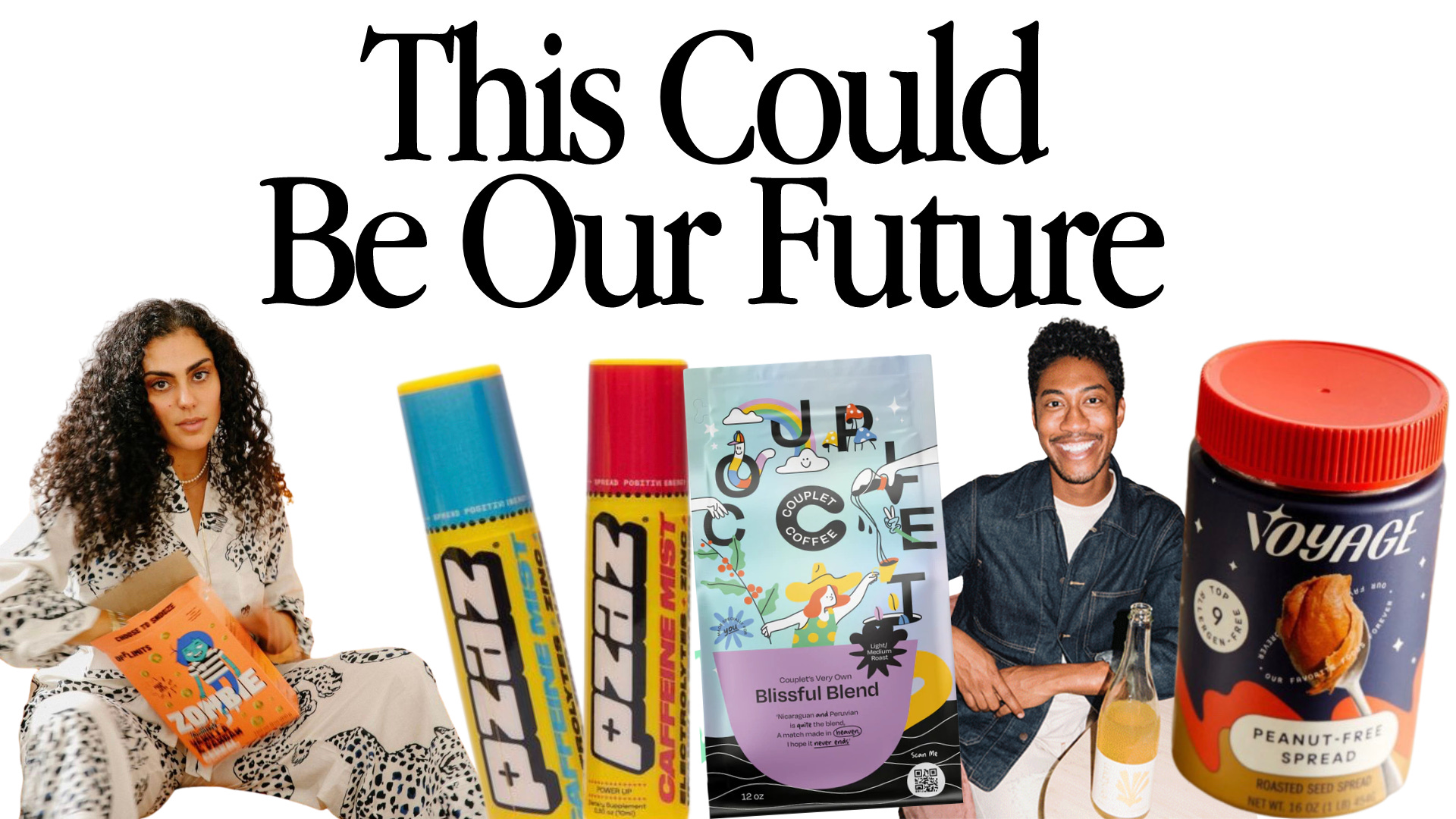
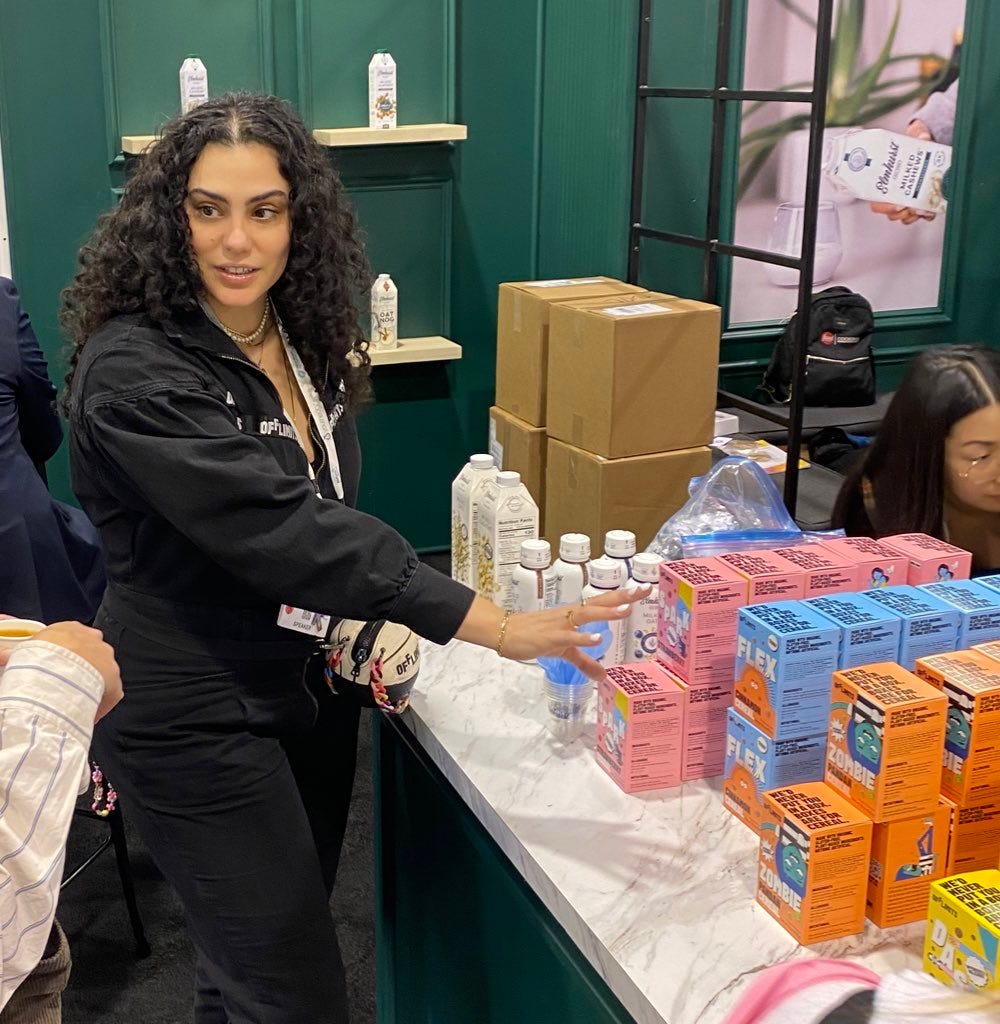
Following Emily Miller from Off Limits as she confidently strolled through the ExpoWest halls, wearing what can only be described as a mesh between military utilitarianism meets neuve punk streetwear, we headed to her shared booth with Elmhurst, plant-based milks, a collaboration she secured to be able to sample her products at an actual stand, without incurring so much of the cost. That’s the thing about Emily, though as a female founder who faces many limitations running a DTC brand, she has a creative solution to ease the friction. She’s been the first brand to explore a more mainstream approach to NFT perks at Art Basel, while hosting her cereal cart, average folk could claim their NFT through a QR code, making sure she chose the best “chain” to be inclusive, and keep costs low —her company recently released the first-of-its kind project where holders of their 2,500 generative NFTs will collaboratively design an IRL cereal box, she’s exploring this dynamic as an alternative, more empowering and community oriented way of raising —innovating in the cereal space, as opposed to incurring massive costs to produce a “hyped out booth.”
Want to chat more snax?Join our Discord with over 1,660 snaxpals!
Fast forward to Austin for SXSW, whilst munching on mushrooms and critters (courtesy of Smallhold) I’m deeply moved by a talk at Future of Food where the moderator is interviewing panelists on how agricultural systems must adapt to pressures —such as a growing population as well as climate change. Whereas cultured food may be offering a vision into the future, most immediately, insect protein offers a more affordable, scalable solution, while plant based alts are being touted as salvation, what does it mean when the meat industry is still dominated by only 4 conglomerates—that are now producing their own “alternative protein?” Shayna Harris, co-founder and managing partner at Supply Change, a fund that seeks to support diverse founders disrupting and breaking up these oligopolies, believes there is money to be made in favor of more local, regionalization of food systems.
'Cause it's a bittersweet symphony, that's life
Tryna make ends meet, you're a slave to money then you die
No change, I can change, I can change, I can change
But I'm here in my mold, I am here in my mold
—Bittersweet Symphony, The Verve
This is our immediate future, talking about what energy sources we must focus on beyond fossil fuels, or as the moderator called it, “petro-dictators” in order to ensure our food supply systems can endure production for what is rapidly approaching to be a 10 billion population in the next 3 decades, simultaneously as our planet deteriorates under the chokehold of war, logistic failures and concentrated systems. Yet looking around this event, made free by way of sponsors, the same hype found at ExpoWest isn’t there, and noting those sitting in the room, there’s not many GenZ folk here—an overarching theme during SXSW, as many folks I talked to in their younger 20s, commented on the irrelevancy of legacy “conferences” amongst those who were trying to build more inclusive gatherings, more so catering to their own demographic cohorts.
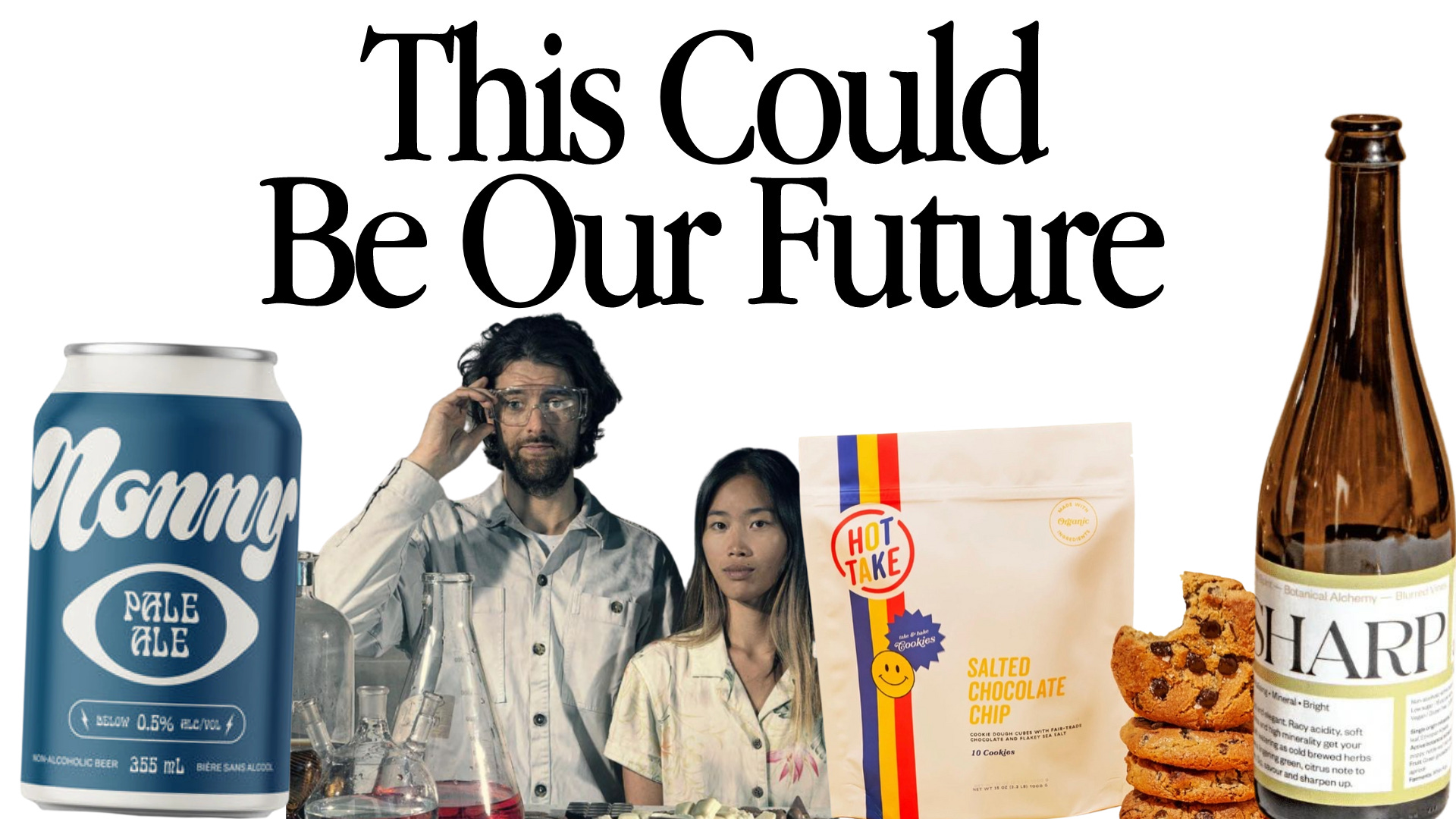
Earlier at SXSW, while standing in line for an after-hours Future of Food mingle, I found myself next to Gabby Brulotte, who I profiled last year for her fun and innovative cookie dough company, Hot Take (formerly Gooey.) She’s now moved to Austin, and alongside her sister, who she co-owns the company with, have been working arduously to rebrand and relaunch, with a new name and face thanks to the work of the coveted design agency, Wonderkind. Considering Gabby is in her mid-20s, and her sister, Elise still in college— I find myself in deep admiration for what they have accomplished in a year since their feature ,having accomplished this being fully bootstrapped, leveraging their own network and wielding their own knowledge of social media and drop culture to find themselves filling up pallets during their first week back! “That’s us in cookie form”—commented Pop Up Grocer, which has become one of the it spots for emerging product discovery, on a post a Snaxshot made about Hot Take, I’m glad it caught their eye.
And we don't care about the old folks
Talkin' 'bout the old style too
—Young Folks, Peter Bjorn and John
Pop Up Grocer is one of the many modern grocers focusing on curating emerging brands that was profiled in our breakdown of “CaaS as the new SaaS” (curation as a service) in food and beverage. To the earlier point on how some are making the case for brands that cannot afford the expensive ExpoWest pageantry, to seek the retailers directly, the reverse is also happening—with retailers who are focused on catering to the modern consumer criteria, actively seeking for brands, curating as opposed to defaulting to the traditional grocer method of, whoever can pay the most real estate gets to play.
None have expanded this concept and proved it’s success as much as Foxtrot Market, colloquially known in the snaxverse as CaaS Daddy —not only have they disrupted traditional grocer in lieu of what favors our generation and beyond, considering we are constantly in perpetual discovery mode, they have also been smart enough to realize new emerging brands can be incubated by them—it’s why they launched their Up and Comers program, previous winners include Ruby and OmSom, both brands that have seen explosive growth ever since, this year they are focused on championing women-led emerging brands. Other big grocer/retailers have adopted this F&B strategy —from the likes of Target, GoPuff, and most recently Whole Foods, but perhaps what has led to the success of this program for them, has been their team of buyers who are part of this new generation, leveraging social as a more modern way of product discovery.
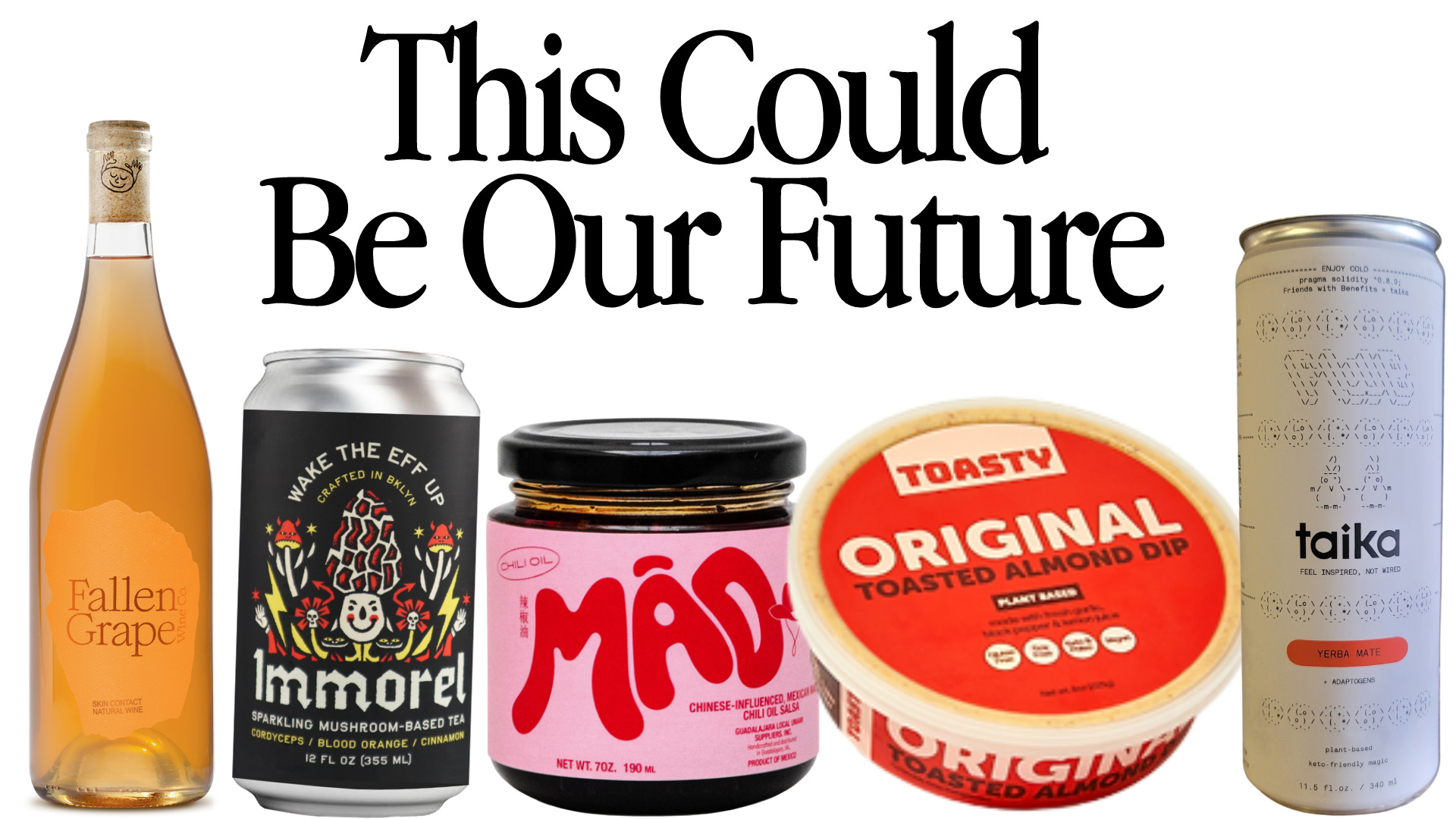
When I came across Salsita Mao, they had recently launched, their iconic pink and fun branding of a blend of macha meets chili crisp oil, was available in one single retail spot in Guadalajara. Snaxshot featured them in our regular, programming, “Oracular Spectacular” wherein I showcase new brands I’ve curated —a month later the founder revealed that Foxtrot Market had picked them up, when I congratulated her she said “And they found me cause of Snaxshot, so thanks so much to you.” In the butchered words of Bob Dylan, —discovery is-a-changing. Here we have an unknown, indie brand, female owned, bootstrapped, based internationally, getting picked up by the hottest grocer in the US at the moment, without the need of a PR team, VC money, or shilling an insane amount of money at Expo, that my friends, is called evening the playing field.
Youth is Starting To Change
Power dynamics are shifting—not just when it comes to discovery, but how and where we consume media, how we build distribution, raise capital, accept job roles —all led by GenZ and their most adept ability to wield the internet as utility, in a way that maximizes and cuts through the bullshit. Take for example Pzaz, who has yet to launch but has been able to build distribution and a loyal cult of bodega owners all over New York City as well as a loyal following amongst GenZ—founder Jonah Reider, is focused on building something that speaks to his own generation, in the manner they are accustomed to, breaking from traditional DTC mold, and inviting equal parts innovation and chaos.
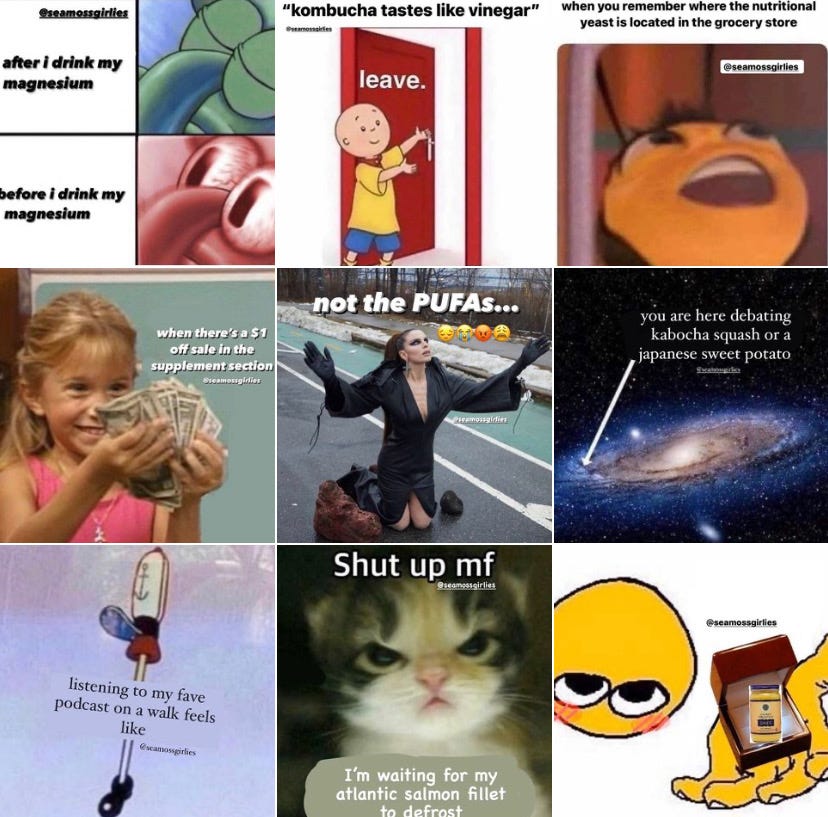
At this very moment, GOOP as a publication is being disrupted by an equal parts podcast, meme account and professional shitposters, Sea Moss Girlies, founded by Kate Glavan, and Emma Roepke, it’s the go to wellness page and community for GenZ. My prediction is that they will become more relevant than GOOP in the next few years, as they speak their generation’s language, better than Millennials could ever translate it, their wit is undefeated, and their posts garner thousands of likes organically and have attracted over 20K followers. Their memes aren’t your cutesy, basic meme, they are disorderly in a good way, a big fuck you to pretty “vibes” and aesthetics that have long permeated the “Girlboss” type of publications, they are the best kind of meme dealers, and part of the counter culture movement in favor of gross aesthetics.
This is a call to arms
To live and love and sleep together
We could flood the streets
With love or light or heat, whatever
—The Youth, MGMT
We explored this lightly in previous issues, but seeing the success of Liquid Death’s messaging and visuals, it has become clear that we have reached inflection point in favor of gross visuals. Take for example Rotten, an in development, healthier sour gummy brand that raised through a Kickstarter, with their logo composing of eyeballs and guts spilling out of each letter, and whose Instagram page contains the most gory snippets of horror movies like Hellraiser, The Thing, and introduce one of the Critters as their first hired intern —it’s equal parts horrific and genius. A complete rejection of minimal, pastel, faux relax vibes that Millennial branding has vomited upon social feeds for the past decade, a juxtaposition of what they grew up with, they embrace the mayhem of the world around them. Other brands who are focusing in this intersection, are the wonderful duo behind Immorel, a sparkling mushroom tea RTD, founded by Hayley and Charlotte, both GenZ and bootstrapping this company whilst working full time jobs that presents mischievous skulls and mushrooms as main characters.
Want more greedy snaxboi? We curate daily on Instagram.

Perhaps the most outstanding quality of GenZ is their permissionless doing, as opposed to Millennials who were sort of thwarted with the mentality that one has to “earn” the ability to “do” —this generation is less about faking it till you make it, and more about just making. When I first wrote about Licked Media back in 2020, Leif Freidmann was just 17 years old, what drew me to his company, was a cereal drop he had made to spoof Millennial cereal and coffee culture, by creating a cereal that paired well ONLY with an iced latte, it was genius. Ever since then, Leif has partnered with a celebrity, influencer chef to drop “Pleasure Taste” and his most latest drop, a ramen chocolate bar spoofing on chocolate matzah he grew up with, sold out, and was also picked up by retailers such as Goods Mart, at 19 he is currently in Copenhagen, furthering his culinary studies, as he is seeking to build brands that help combine food waste with making healthy, accessible, powdered foods for the masses (think powder mash potatoes) —he’s still a teenager, I admire his resilience greatly.
Him and many more like him represent a more hopeful future.
Everybody's Changing, I Don't Feel the Same
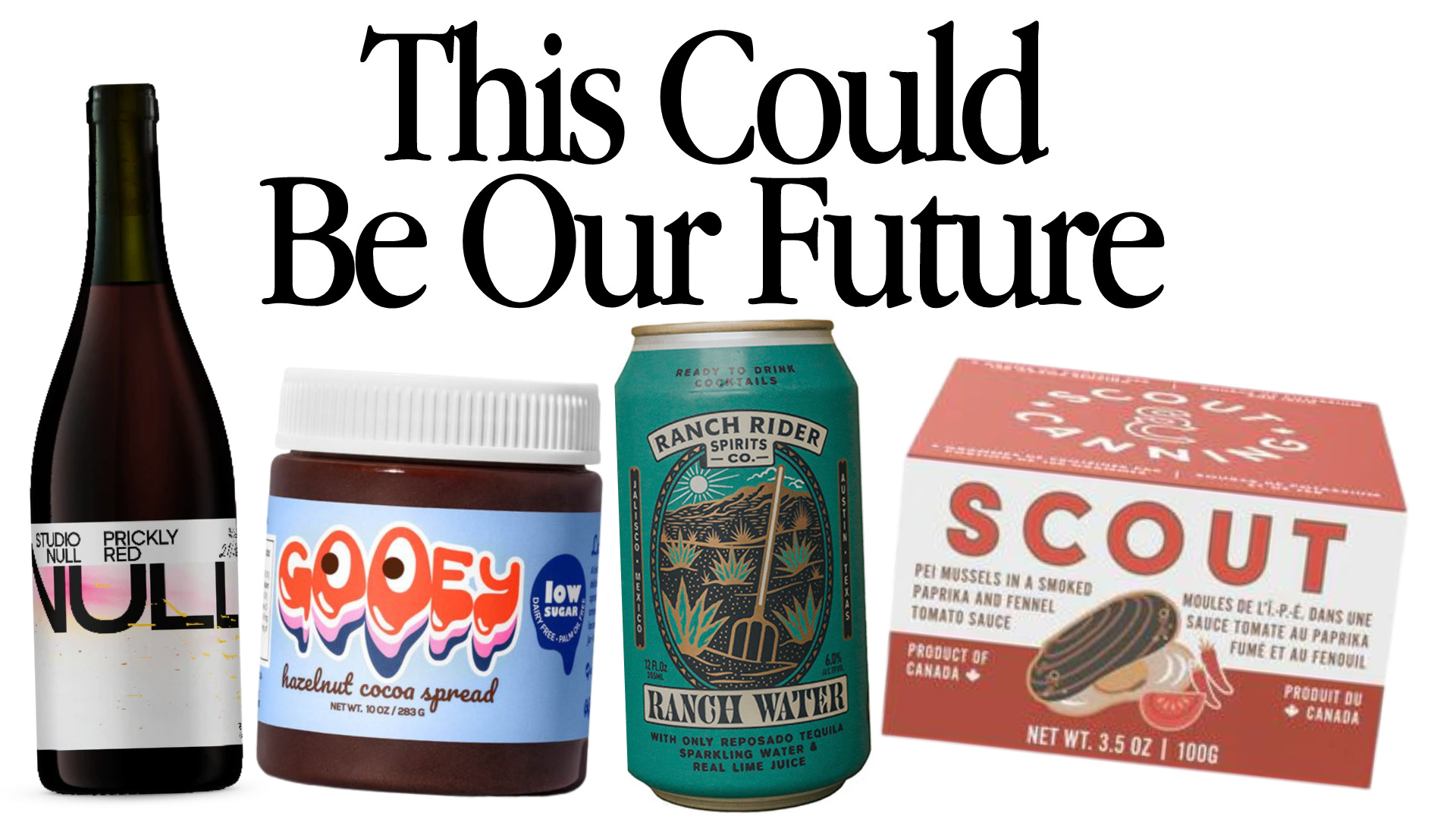
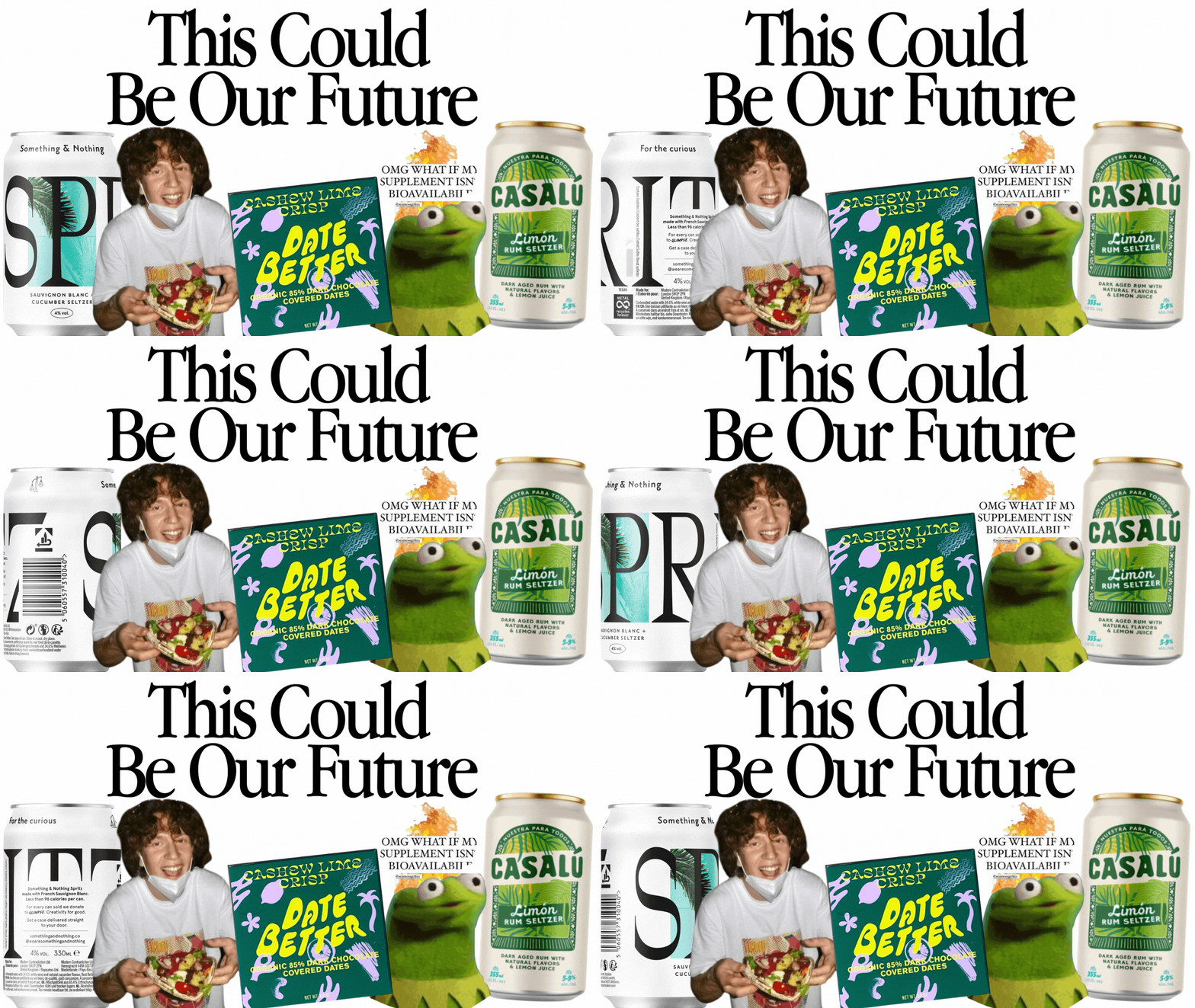
In his book, “This Could be Our Future” Yancey Strickler, who is the founder of Kickstarter writes up a manifesto for a more generous world, one where we forego indoctrination into zero sum mentalities, outdated and archaic structures that keep us enslaved to them, and focus on finding a new way to create more of a collective win approach, it has inspired a lot of the approach I’ve taken with Snaxshot, and have been able to witness first hand, that these dynamics are possible. There are others seeking to disrupt many of the structures set in place in their own doing, and without any further cogitations, allow me to introduce you to a few of them:
Fallen Grape —
Founder Paul Longo is seeking to bring natural wine to the masses by removing the usual eau of stuffiness and snobbery that often times has surrounded the wine industry, making Fallen Grape a brand that focuses on community, bridging education gaps around the category as well as making it a fun experience that is enjoyable, as opposed to just a way of signaling “in the know” think of it as wine as an act less of communion, but more of communing, bringing us back to our connection to land —think sneak peeks of fermentation process etc, a revelation of an olden art form, and lost origins of human enjoyment.
Bantu, Zora and Sonhab —
Led by female founders, all three brands are focused on proving that bean to bar is possible, not with a focus on elevating the communities where their cocoa is sourced from. All relatively new, Bantu focuses on “empowerment not charity” and decolonizing the cocoa supply chain, sourcing from Cameroon. Zora focuses on transparency and traceability while donating to a school a day, for every bar sold, empowering West African communities. Sonhab focuses on batching functional, thoughtfully sourced bars, helping empower communities like the indigenous Bribri, a matriarchal society found in Costa Rica, they work with El Puente Bridge directly.
Taika and Friends With Benefits —
Perhaps one of the most fascinating experiments come out of the intersection of DAOs, web3 and CPG, these two communities paired together to show what it’s like to bring community as a co-founder, allowing for them to be part of the R&D as well as the taste testers to produce a high quality, sparkling yerba mate.
Monsoon Market —
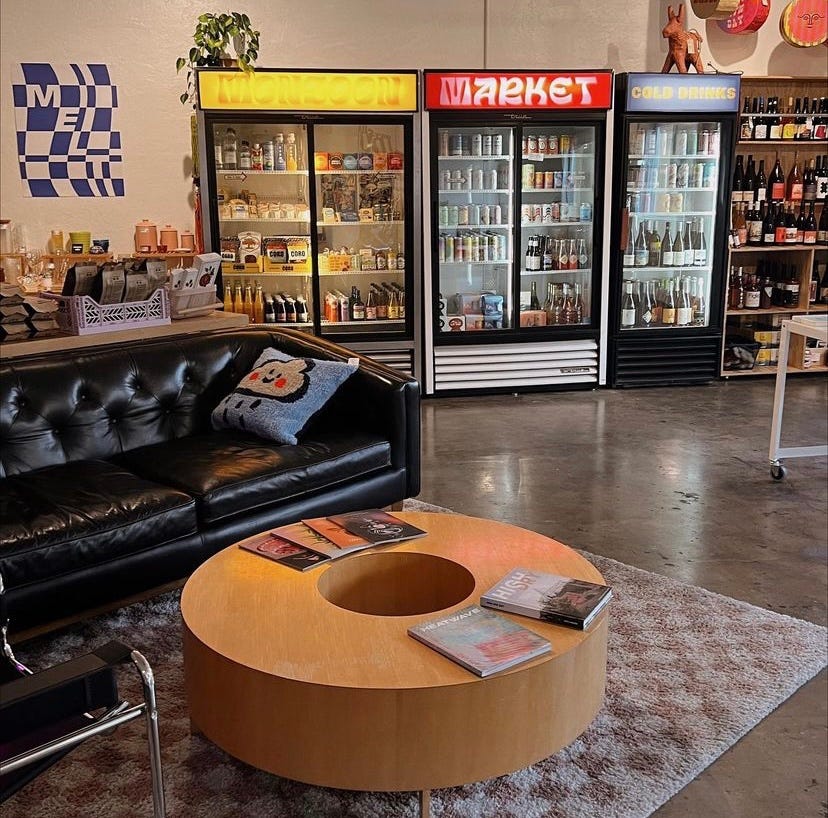
The female founders at Monsoon Market have become a Phoenix staple, particularly among the youth, it has become a GenZ hotspot, known for influencers and shoppers alike to stop by to make content, discover the latest emerging brands, and indulge in aesthetically pleasing Y2K vibes, all while empowering the local artists and creatives, while fostering a more inclusive community. They have become expert curators not just of dope vintage furniture that give their shop that perfect retro store, but they have been able to create a symbiotic millennial-GenZ relationships —they offer a shop for discovery and content, and in turn, TikTok stars are flocking their shop, generating thousands of views for them with their videos, and increasing their foot traffic, talk about inter generational relations!
Couplet —
Gefen is an unapologetic founder who continues to pave way, not just for her generation as GenZ, but as a female LGBTQ+ founder, who has successfully raised venture capital, collaborated with the likes of Bumble, retailers like Pop Up Grocer, sold out of merch drops and continues to expand her retail footprint as much as her DTC growth.
Heirloom Provisions—
Joshua McLeod is the founder behind this naturally modern, small batch kombucha brand. Started during the pandemic, as a way to keep distracted during lockdown, he has grown his operation from kitchen, to growing out into a nano-brewery, as his brand has garnered attention, not just through the use of drop model, but also because the branding is alluring, and makes for the perfect gift, or bar cart shelfie. He documents what it’s like to bootstrap a brand as a solo founder, having to fulfill the entire operation, from brewing to shipping. A true testament to food and beverage as resilience, redemption and resurrection post pandemic.
Potli —
Felicity Chen is at the intersection of CPG, cannabis and most recently —crypto. Born an Asian American immigrant in the Bay Area, shew grew up observing the importance of food as medicine. This lens built the foundation of their company, and they have made it Potli’s duty to share the idea that food can also be medicine with the world. Today, Potli produces an array of essential foods like olive oil and apple cider vinegar that are all infused with sun grown cannabinoids from the emerald triangle. They proudly celebrate their heritage with their chili oils and srirachas. They are also an incredible diverse team of international women—from South Korea, Spain, Los Angeles, to the Bay Area!
PEAK —
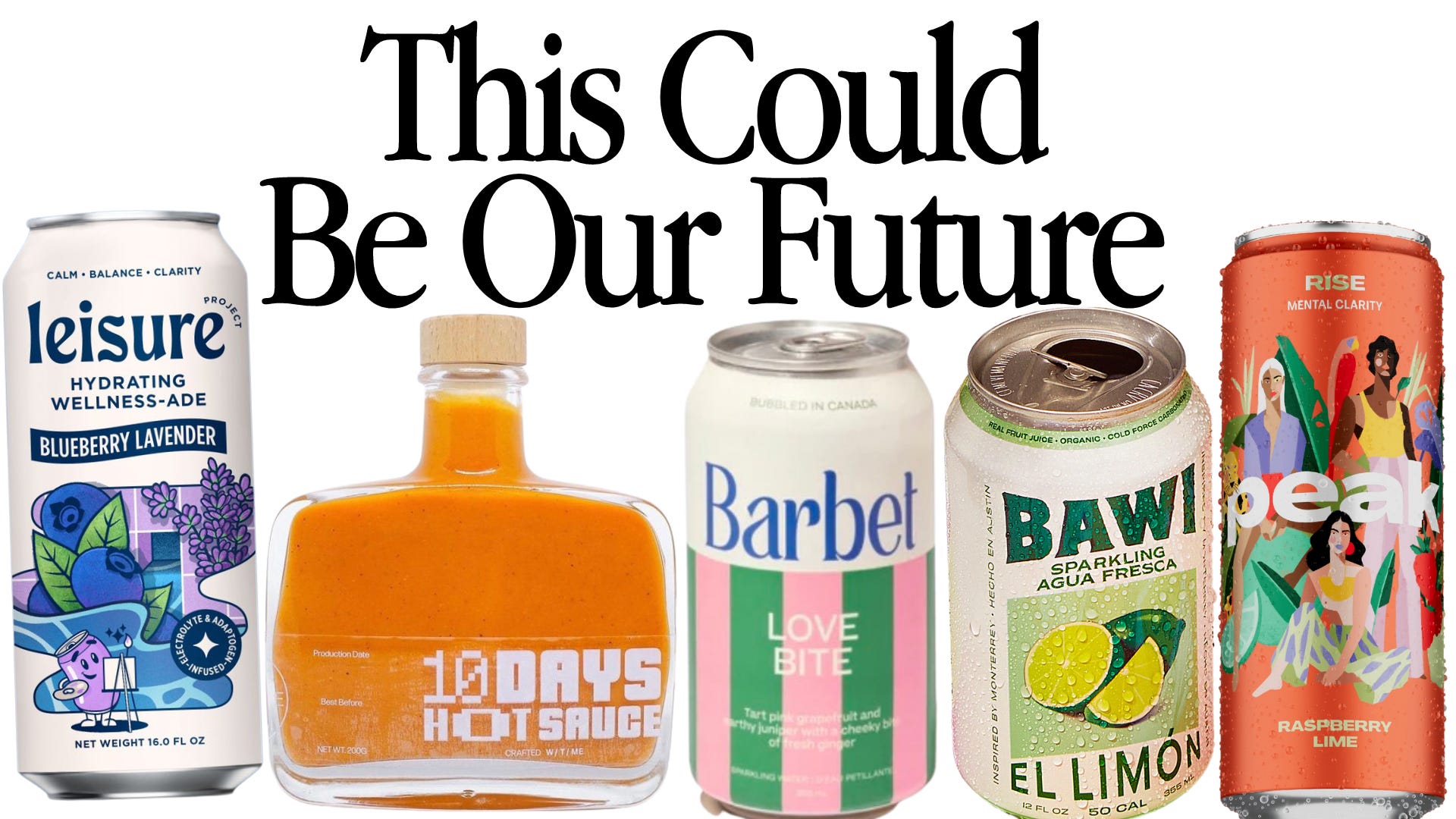
An alternative to a more conscious and mindful state of being, based in the UK the founders are a great example of bootstrapped success by investing in their branding and narrative, not to mention out of the norm look that is equal parts modern and Y2K. They have yet to close their first round of VC, and yet have garnered the interest of UK staples like Planet Organic and partnerships with Gorillas, further expanding their retail footprint, all while bootstrapping and using UGC, creativity and curation as a way to create community around mental wellness.
Casalú —
Venezuelan immigrants based in Miami, have most recently launched a rum seltzer beverage rooted in Latin American culture, with a nod to their new found American living. What started as an idea, has quickly developed into one of the hottest products dropping just in time for summer, to testament that immigrants are equal parts hard working an innovative.
Voyage Foods and WNWN Foods —
Both tackling alternative treats, while Voyage Food is lab based, allergen-free, peanut-free and cocoa-free products, WNWN is using fermentation as a process of creative equal alternative to chocolate. Both represent the future of what snacking will look like for Gen Alpha and Beta, as allergen-free has become an on demand criteria, not to mention, having to cater production to climate change.
Want more greedy snaxboi? We curate daily on Instagram.
Scout Canning —
We deep dived into alternative seafood for a reason, our oceans have been in trouble and need the most immediate help to counteract our depletion and disruption to this ecosystem. Scout Canning, has proven that it can be an immediate and more scalable solution to alternatives, part of the T2T, tin-to-table renaissance, they focus on sustainable, local seafood, that also plays part in helping regenerate the ecosystem. Founders Adam Bent, Nate Dunn and Chef Culinary Officer, Charlotte Langley, are spicing up this industry, in an ethical, sustainable way.
Nemi Snacks —
Founder Regina Trillo is originally from Mexico, but now an immigrant and successful lawyer based in Chicago. She founded Nemi snacks as a counter to the influx of stereotype filled snacks she found at her local grocers—whereas other brands focused on the “sombrero mustached” character, Regina wanted to highlight and honor favorite ingredient of hers, the nopal (cactus) —she opted to forego relying on usual Mexican imagery, and instead focus on building out a universe around the ingredient. She’s been bootstrapping her business and continues to expand, most recently having gone through a beautiful brand upgrade, another testament to immigrant resilience.
Noodie —
Isabel Khoo is the mastermind behind the chicest, healthy and irresistible ramen brand called Noodie, her brand has become the ultimate signaling snack, attracting both GenZ and Millennials alike with their promise of a more fulfilling slurp, an Asian American founder, she continues to pave a path for others like her, inviting them to grab life by the bowls, her vegan tonkotsu flavor is equal parts innovating and rich in flavor, truly alchemical experience.
Kora —
Rejoice, we are starting to see the rise of the science backed functional beverages —born out of the lab of a lauded group of scientists from MIT, and led by Madji Osman, clinical director of Open Biome —they are building a beverage brand that will bring a better kind of fiber to the masses, to make gut health accessible to all, truly inspiring.
Update —
Born out of Aussie immigrant, Daniel Solomons, and also part of the emerging science backed function category, Update uses a lab based ingredient, created by a renown group of scientists, to offer effortless but upgraded energy without caffeine. They will also be incorporating more more, mass friendly web3 dynamics, soon launching, be on the lookout for them at Bitcoin Miami
Oracular Spectacular
A subsidiary of the Snax Television Network.
Shhhhhhhhh!!!! My favorite show’s about to start “What’s New, You Ask?”

Le Chill: A new line of naturally “chill” wines —and since we’re cool, not all “uncool” we dig their minimal vibes which seem to be an ode to primary colors and very reminiscent of early 90s aesthetics.
Sonny: Coming soon, to a doorstep near you. the yet to be released Sonny Seltzer, a new line of tequila and flavored sparkling water.
Hey Hey: Here just so I can implore y’all, for fuck sakeeeeeeee, when will the RTD blanding end?!
Raspy: NFTs are the new brand mascot, you heard it here first, Raspy is an upcoming chocolate snack that is using ONE particular Invisible Friends, by Dave Plowden.
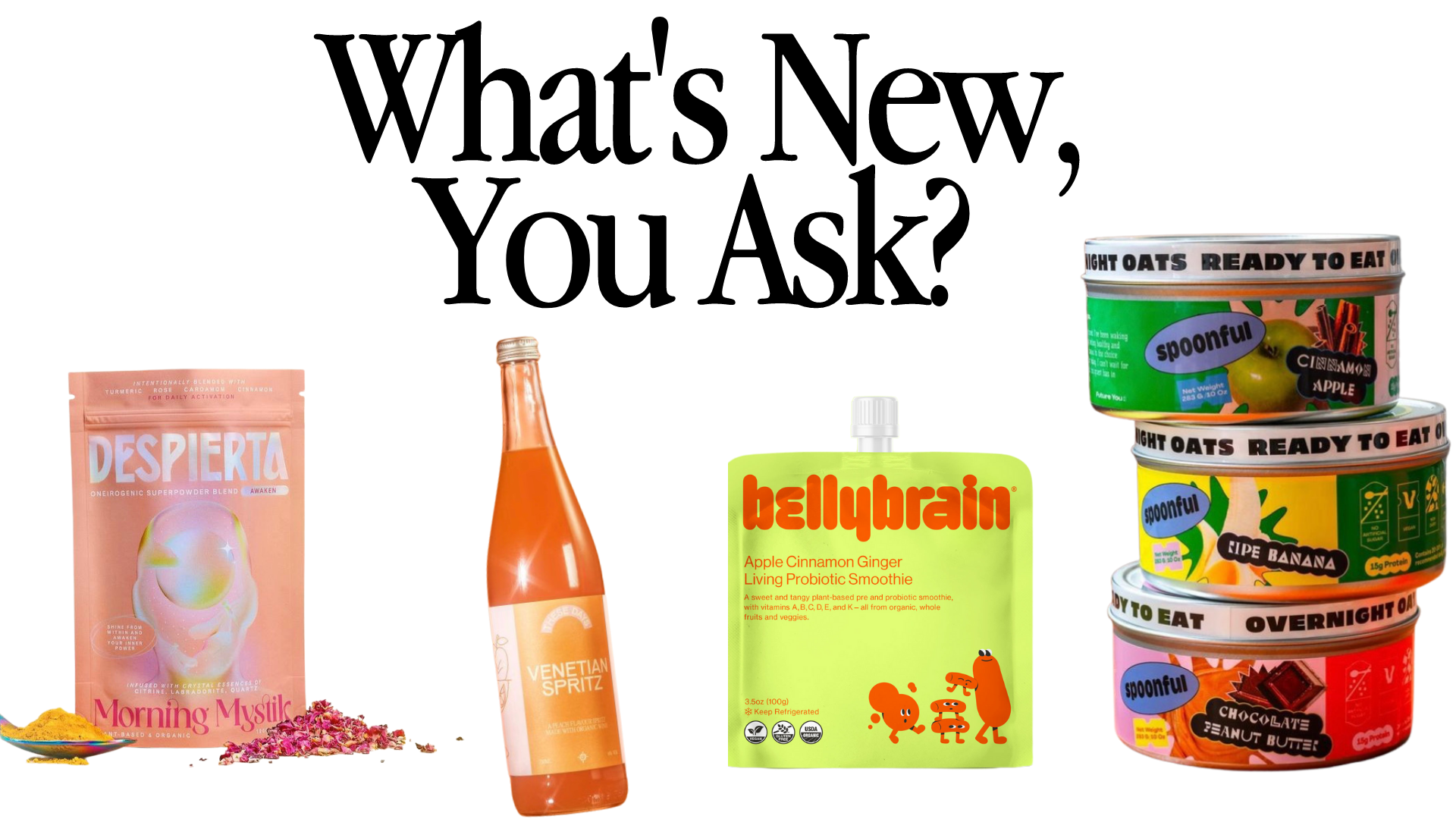
Spoonful: Overnight oats have been booming, these fun, flavorful onos are coming soon, to a mouthful near you!
BellyBrain: Have yet to officially launch, but this family founded company is a probiotic smoothie for all generations alike!
Despierta: Functional blends see no end in sight, this one is a mix of Lisa Frank meets web3 vibes, recently launched.
These Days: Warmer days are coming and with that the promise of a good aperol spritz.
Want to chat more snax?Join our Discord with over 1,660 snaxpals!
Spoonful of News 🥄
Our friends at Starday Foods have announced a partnership with Kroger, congratulations Chaz and Caroline, it’s only been 6 months since they introduced Gooey (their first product) to the world!
Icee releases a cookie snack line with slurpee inspired filling because you should chew your sugar you degenerate!
Chipotle’s new tortilla chip making robot is named Chip.
Leisure released their NFT collection, for those who own Leisure Creatures, you will be able to taste their hydration forward beverage, 60 days from now!
Taking a page from Patagonia and Dr. Bronner’s, clothing line, Pangaia is releasing a line of snacks.
See you again next week, in a different future, same place.
Snax Concierge 🛎️
🔮 For daily snax curation and memes follow our Twitter and IG.
🔮 Check out our Discord for promo codes of your favorites!
🔮 Share with your friends and let them know forecasting trends is the new astrology:
CaaS Daddy :: what every retailer aspires to become.