


What you’ll find in this issue—
These aren’t your parent’s groceries.
The spectrum of grocery shopping.
What defines a hypebeast grocer?
Scene report from around the world.
How this impacts grocers, brands and consumers alike.
Groceries as Identity
What does your olive oil say about you? It used to be the task of a marketer to be able to decipher, what kind of person is buying a CPG product at a specific price point, and brands would shell out enormous amounts of money to conduct surveys and parse through quantitive data to try and scramble something qualitative to sell back to them, as insight. Past generations were a lot more of a mystery because they weren’t as eager to be intertwined in marketing tactics as newer generations are, particularly when it comes to something so basic and inherit as grocery shopping. In my essay, “The New Grocer” we dive into the history behind the formats of modern grocery stores and how it fundamentally changed the way we started to view food essentials—but beyond the influence of store formats, technology has had a massive impact in how entire generations relate to brands and retailers themselves.

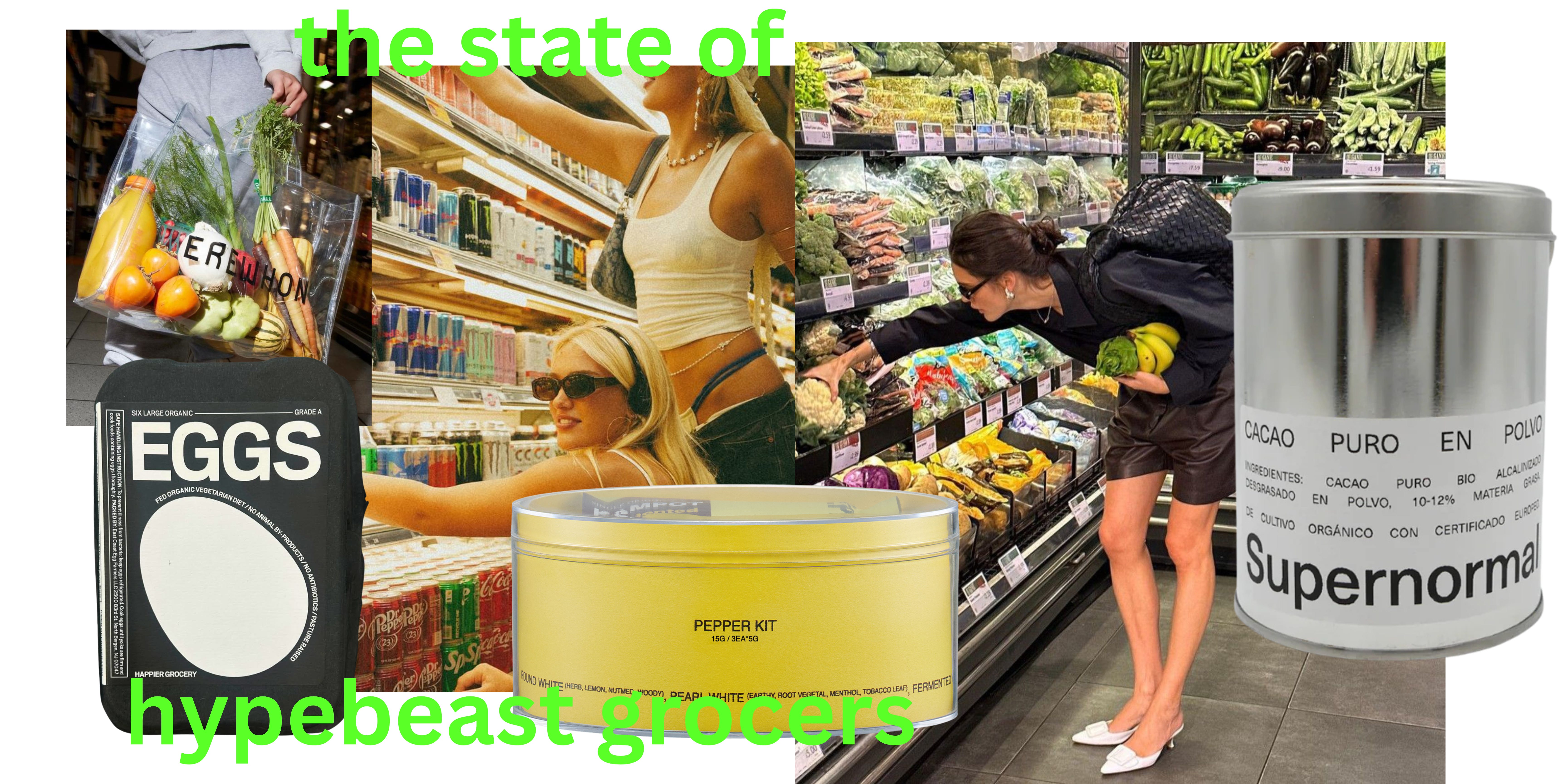
In “Horny, Horny Produce” I connect our new obsession with groceries to our foodie origins, packaging porn became the new food porn—all thanks to the advent of social media, to be more specific, Instagram. Though of course our behavior of trying to see the beauty and elevate something as monotous as fruit, spans the entire human history, it takes on a different format for Millennials and GenZ, it may not be as poised as the famous still life paintings of artists across the 17th century but similarly, we too try to capture coquette produce in the shape of a grid or reel (albeit, a lot less time consuming.)
